
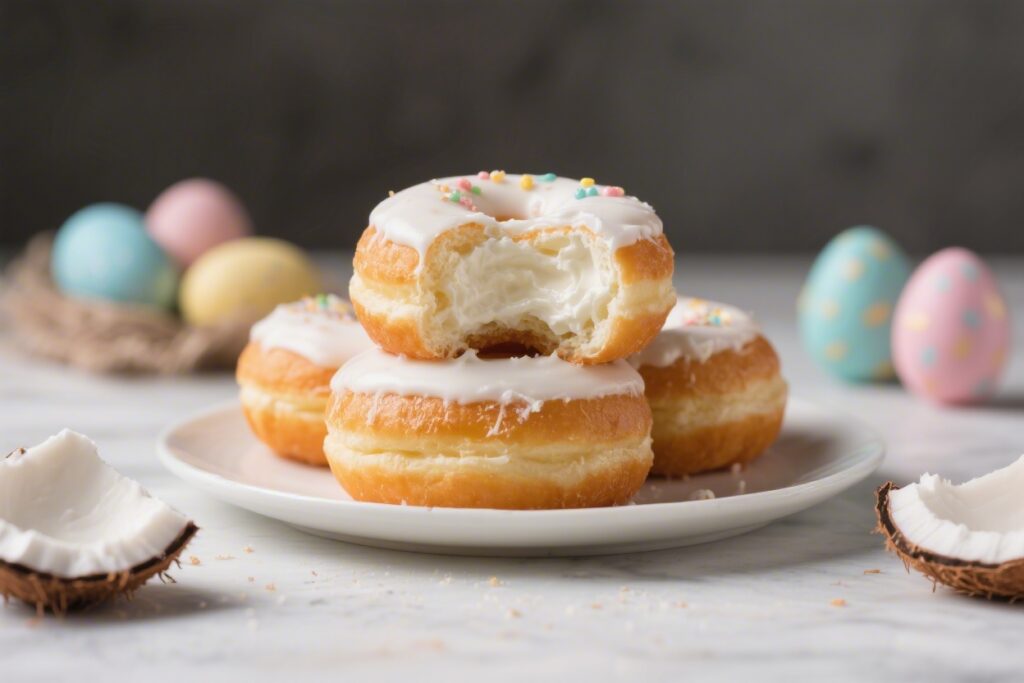
These Coconut Cream Filled Easter Doughnuts bring a little sunshine to your spring table. They’re soft, fluffy, and filled with a silky coconut pastry cream that tastes like a tropical holiday. Each doughnut gets a glossy dip in vanilla glaze and a shower of shredded coconut for a pretty, nest-like finish.
They look festive, taste indulgent, and feel surprisingly doable at home. If you’ve been wanting a bakery-style treat with a seasonal twist, this one checks every box.
What Makes This Recipe So Good
- Light, pillowy doughnuts: Enriched dough gives you that soft, tender bite you love from a great bakery doughnut.
- Lush coconut filling: A rich pastry cream made with coconut milk and toasted coconut adds real-deal flavor—no artificial coconut here.
- Make-ahead friendly: The coconut cream can be made a day in advance, so assembly is a breeze.
- Festive finish: A simple vanilla glaze and sweet coconut on top make them picture-perfect for Easter brunch.
- Customizable: Change coatings, shapes, or fillings to fit your style without losing the spirit of the recipe.
Recipe Card
Coconut Cream Filled Easter Doughnuts
Ingredients
For the doughnuts:
- All-purpose flour
- Whole milk
- Active dry yeast (or instant yeast)
- Granulated sugar
- Unsalted butter
- Large eggs
- Fine sea salt
- Neutral oil for frying (canola or peanut)
For the coconut pastry cream:
- Full-fat coconut milk (canned)
- Whole milk
- Granulated sugar
- Cornstarch
- Large egg yolks
- Unsalted butter
- Vanilla extract
- Unsweetened shredded coconut (toasted preferred)
- Pinch of salt
For the glaze and topping:
- Powdered sugar
- Milk or coconut milk
- Vanilla extract
- Shredded coconut (sweetened or unsweetened)
- Optional: pastel sprinkles or mini chocolate eggs for decoration
Instructions
- Make the coconut pastry cream. In a saucepan, whisk 1 cup coconut milk, 1/2 cup whole milk, 1/3 cup sugar, and a pinch of salt. Warm over medium heat until steaming. In a bowl, whisk 3 egg yolks with 3 tablespoons cornstarch until smooth. Temper by slowly whisking in half the hot milk, then return everything to the pan. Cook, whisking, until thick and bubbling. Remove from heat, stir in 2 tablespoons butter, 1 teaspoon vanilla, and 1/2 cup toasted shredded coconut. Transfer to a bowl, press plastic wrap directly on the surface, and chill until cold.
- Bloom the yeast. Warm 3/4 cup milk to about 105–110°F. Stir in 2 teaspoons sugar and 2 1/4 teaspoons active dry yeast. Let sit until foamy, about 5–10 minutes. (If using instant yeast, you can skip blooming and mix it with the flour.)
- Make the dough. In a mixer bowl, combine 2 3/4 cups flour, remaining sugar (about 1/4 cup), and 1/2 teaspoon salt. Add the yeast mixture, 2 beaten eggs, and 4 tablespoons softened butter. Mix on low until a shaggy dough forms, then knead 6–8 minutes until smooth and slightly tacky. Add a tablespoon of flour at a time if overly sticky.
- First rise. Shape into a ball, place in a lightly greased bowl, cover, and let rise in a warm spot until doubled, about 1–1.5 hours.
- Shape the doughnuts. Roll the dough on a lightly floured surface to 1/2-inch thickness. Cut rounds with a 3-inch cutter. Gather scraps, rest 10 minutes, and re-roll to cut more. Place rounds on parchment-lined sheets, leaving space.
- Second rise. Cover lightly and let rise until puffy, 30–45 minutes. They should look airy and jiggle slightly when nudged.
- Heat the oil. In a heavy pot, heat 2–3 inches of oil to 350°F. Keep a thermometer clipped to maintain temperature.
- Fry. Carefully lower 3–4 dough rounds at a time into the oil. Fry 1–2 minutes per side until deep golden with a pale ring around the center. Adjust heat to hold 350°F. Transfer to a rack to drain and cool.
- Make the glaze. Whisk 1 1/2 cups powdered sugar with 2–3 tablespoons milk and 1/2 teaspoon vanilla until smooth and pourable. Add a splash more milk if too thick.
- Fill the doughnuts. Poke a hole in the side of each doughnut with a paring knife or skewer. Spoon the chilled coconut cream into a piping bag fitted with a small round tip. Pipe filling into each doughnut until it feels slightly heavier and a bit of cream peeks out.
- Glaze and finish. Dip the tops in glaze, let excess drip off, then press into shredded coconut. For Easter flair, add a few pastel sprinkles or perch a tiny chocolate egg on top.
- Let set and serve. Allow the glaze to set for 10–15 minutes. Enjoy slightly warm or at room temperature.
How to Store
- Same day: Best within 6–8 hours of frying for peak texture.
- Overnight: Store filled doughnuts in an airtight container in the fridge for up to 2 days. The texture will soften but still taste great.
- Make-ahead components: The pastry cream keeps 2–3 days in the fridge.
Unfilled doughnuts can be fried, cooled, and frozen (wrapped well) for up to 1 month. Thaw, warm briefly in a low oven, then fill and glaze.
- Avoid condensation: Let doughnuts cool fully before boxing to prevent sogginess.
Health Benefits
- Coconut’s healthy fats: Coconut contains medium-chain triglycerides (MCTs), which your body can use for quick energy. Enjoy in moderation.
- Protein from eggs and milk: The pastry cream includes yolks and dairy, adding a bit of protein to balance the sweetness.
- Portion control: These are an occasional treat.
Pair with fruit or a protein-rich breakfast to keep energy steady.
- Toasting coconut: Toasting heightens flavor, so you can use a lighter hand with sugar elsewhere.
What Not to Do
- Don’t rush the rises. Underproofed doughnuts turn dense and heavy.
- Don’t overheat the oil. Too hot, and the outside burns while the inside stays raw. Aim for a steady 350°F.
- Don’t skip chilling the pastry cream. Warm cream will ooze out and make glazing messy.
- Don’t crowd the pot. Fry in small batches so the oil temperature doesn’t crash.
- Don’t roll the dough too thin. Anything under 1/2 inch won’t give you that classic pillowy height.
Recipe Variations
- Lemon-coconut: Add 1 teaspoon lemon zest to the pastry cream and a squeeze of lemon juice to the glaze for a bright, springy finish.
- Chocolate coconut: Dip in chocolate ganache instead of vanilla glaze, then roll in toasted coconut.
- Baked brioche buns: If frying isn’t your thing, bake brioche rolls, split, and fill with the coconut cream. Not a doughnut, but just as satisfying.
- Almond joy nod: Add a few chopped toasted almonds inside with the coconut cream and drizzle with chocolate.
- Mini doughnut holes: Cut smaller rounds or punch holes from scraps, fry, and pipe a tiny bit of cream into each for bite-size treats.
FAQ
Can I use store-bought custard instead of making pastry cream?
Yes, but stir in coconut milk concentrate or coconut extract and some toasted coconut to bring in proper coconut flavor.
Homemade cream will be thicker and more flavorful, though.
What oil is best for frying doughnuts?
Use a neutral, high-smoke-point oil like canola, peanut, or refined sunflower. Avoid olive oil or anything strongly flavored.
How do I know the dough is kneaded enough?
It should feel smooth and elastic and pull cleanly from the bowl, with only a light tackiness. If you stretch a small piece, it should form a thin “windowpane” without tearing easily.
My doughnuts are greasy.
What went wrong?
The oil was likely too cool, or the dough was underproofed. Keep the oil at 350°F and let the shaped rounds get nicely puffy before frying. Drain on a rack, not paper towels, to avoid steam trapping.
Can I make these gluten-free?
Use a high-quality 1:1 gluten-free flour blend designed for yeasted doughs and add 1 teaspoon xanthan gum if your blend doesn’t include it.
Expect a slightly denser crumb, but they’ll still be delicious.
Is there a dairy-free option?
Yes. Use full-fat coconut milk only in the pastry cream and swap dairy milk with more coconut milk. In the dough, use plant milk and vegan butter.
The texture changes a bit but remains soft and flavorful.
Do I have to use a stand mixer?
No. Mix with a sturdy spoon, then knead by hand 8–10 minutes. It just takes a little more elbow grease.
How much filling should I pipe into each doughnut?
Go until the doughnut feels heavier and you see a small bead of cream at the opening—usually 2 to 3 tablespoons, depending on size.
Final Thoughts
Coconut Cream Filled Easter Doughnuts feel special without being fussy.
With a little planning—make the cream ahead, watch your oil temperature, and give the dough time to rise—you’ll end up with a bakery-worthy batch that steals the show at brunch. They’re soft, fragrant, and just sweet enough to mark the holiday. Set them on a platter, add a few pastel touches, and watch them disappear.
Enjoy the process, and enjoy the first warm taste of spring.