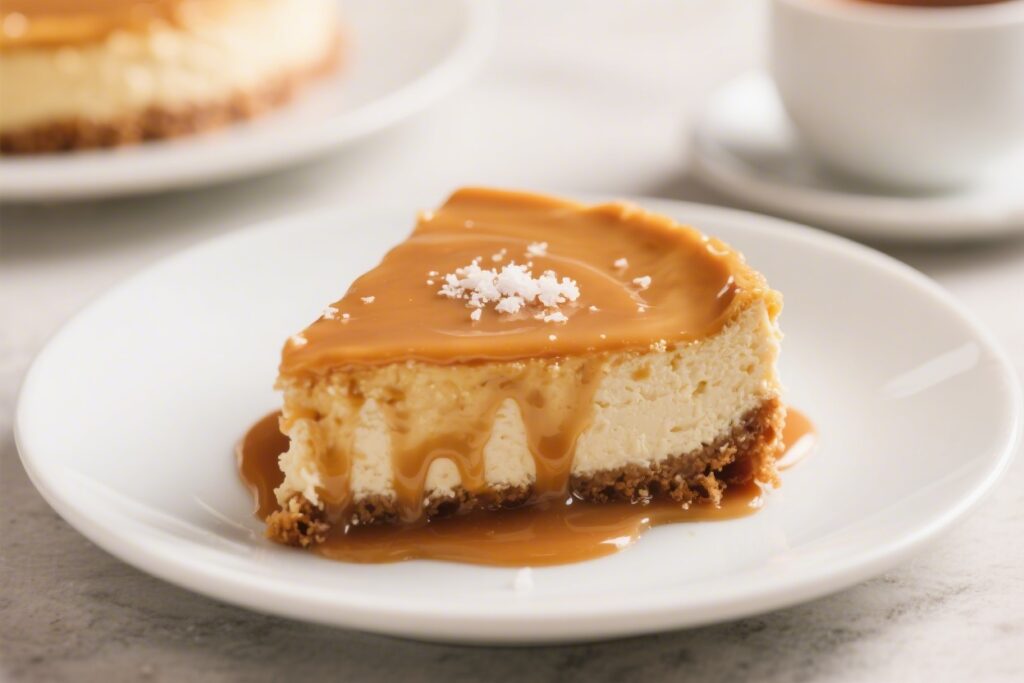
If you love the mix of sweet and salty, this cheesecake is going to be a favorite. It’s silky, rich, and topped with a glossy layer of salted caramel that brings everything together. The crust is buttery and crisp, the filling is smooth, and the caramel has just the right bite of salt.
It’s special occasion-worthy but simple enough for a weekend bake. With a few smart steps, you’ll get clean slices and a beautiful finish every time.
What Makes This Special
This cheesecake nails the balance of flavors—deep caramel notes, a hint of sea salt, and a mellow, creamy base. The texture is velvety without being too heavy, thanks to a touch of sour cream and a gentle baking method.
The caramel layer isn’t just decoration; it soaks slightly into the top, adding extra richness in every bite. Best of all, you can make it ahead, which makes entertaining easier and less stressful.
Recipe Card
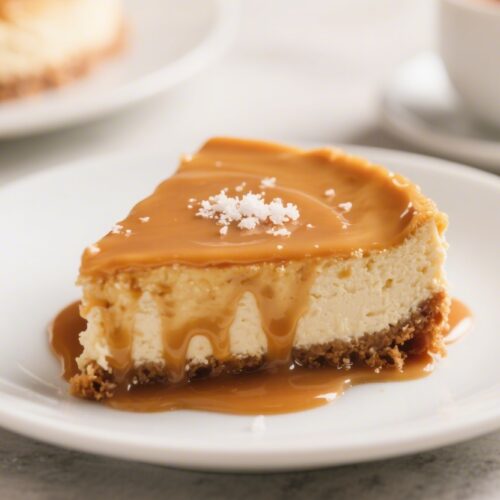
Salted Caramel Cheesecake
Ingredients
For the crust:
- 1 1/2 cups (150 g) graham cracker crumbs (or digestive biscuits, finely crushed)
- 2 tablespoons granulated sugar
- 1/2 teaspoon fine sea salt
- 6 tablespoons (85 g) unsalted butter, melted
For the filling:
- 24 ounces (680 g) cream cheese, softened to room temperature
- 1 cup (200 g) granulated sugar
- 1/2 cup (120 g) sour cream, room temperature
- 1/3 cup (80 ml) heavy cream, room temperature
- 1 tablespoon pure vanilla extract
- 3 large eggs, room temperature
- 1/4 teaspoon fine sea salt
For the salted caramel:
- 1 cup (200 g) granulated sugar
- 6 tablespoons (85 g) unsalted butter, cut into pieces
- 1/2 cup (120 ml) heavy cream, warmed
- 1–1 1/4 teaspoons flaky sea salt (to taste)
- 1 teaspoon vanilla extract
Optional garnish:
- Extra flaky sea salt, whipped cream, or caramel shards
Instructions
- Prep the pan. Line the bottom of a 9-inch springform pan with parchment and lightly grease the sides. Wrap the outside of the pan in two layers of heavy-duty foil to protect it from water in the bath.
- Make the crust. In a bowl, mix graham cracker crumbs, sugar, and salt. Stir in melted butter until the crumbs feel like wet sand. Press firmly into the bottom and slightly up the sides of the pan. Bake at 350°F (175°C) for 8–10 minutes. Cool while you make the filling.
- Lower the oven temperature. Reduce to 325°F (165°C). Bring a kettle of water to a boil for the water bath.
- Blend the filling gently. With a mixer on low to medium-low, beat cream cheese until smooth, about 2 minutes. Add sugar and salt, mix until combined. Blend in sour cream, heavy cream, and vanilla. Add eggs one at a time, mixing just until incorporated. Do not overmix—too much air causes cracks.
- Assemble for baking. Pour filling over the cooled crust. Place the foil-wrapped pan in a large roasting pan. Pour hot water into the roasting pan to reach halfway up the sides of the springform pan.
- Bake. Bake at 325°F (165°C) for 55–70 minutes. The edges should be set and slightly puffed, and the center should jiggle like set Jell-O. Don’t wait for it to be firm in the middle.
- Cool slowly. Turn off the oven, crack the door, and let the cheesecake rest inside for 45–60 minutes. Remove from the water bath, run a thin knife around the edge, and cool to room temperature. Chill at least 6 hours, preferably overnight.
- Make the salted caramel. In a heavy saucepan, heat sugar over medium heat, stirring just until it starts to melt, then stop stirring. Swirl the pan as the sugar turns deep amber. Add butter carefully (it will bubble), whisk until smooth. Slowly stream in warm cream, whisking constantly. Remove from heat and stir in vanilla and flaky sea salt to taste. Let cool to a pourable but thick consistency.
- Top the cheesecake. Pour a layer of caramel over the chilled cheesecake and gently tilt to spread. Chill 20–30 minutes to set. Sprinkle a touch more flaky sea salt before serving, if you like.
- Slice cleanly. Use a sharp knife warmed in hot water and wiped dry between cuts for neat slices.
How to Store
- Refrigerate: Cover and keep in the fridge for up to 5 days. Add the caramel the day you serve for the freshest look, or add it 1 day ahead.
- Freeze: Chill the plain cheesecake fully, then wrap tightly in plastic and foil.
Freeze up to 2 months. Thaw overnight in the fridge and add caramel after thawing.
- Leftover slices: Store in airtight containers to prevent fridge odors and keep the crust from softening.
Health Benefits
Cheesecake isn’t health food, but it can still fit into a balanced lifestyle. Cream cheese and sour cream provide protein and calcium, which support bones and muscle function.
Eggs also add protein and key nutrients like choline. If you want to lighten it slightly, use a thinner caramel layer and serve smaller portions with fresh berries for fiber and brightness. A mindful slice can satisfy cravings without going overboard.
Pitfalls to Watch Out For
- Cracks on top: Often caused by overmixing, overbaking, or a fast temperature change.
Mix on low and cool slowly in the oven.
- Soggy crust: Be sure the foil seal is tight and the crust is pre-baked. You can also skip the water bath and use a low-and-slow bake with a pan of hot water on a lower rack, though the texture is best with a true bath.
- Grainy caramel: Stir only until sugar begins to melt, then stop. Don’t rush the browning, and add cream slowly.
If it seizes, keep it over low heat and whisk until smooth.
- Leaky springform: Test your pan with water beforehand or add an extra layer of foil. A silicone wrap can also help.
- Soft center: A gentle wobble is good; liquid isn’t. If it’s too loose, bake in 5-minute increments.
Remember, it firms up as it cools.
Variations You Can Try
- Chocolate crust: Swap graham crackers for chocolate wafer cookies for a deeper, cocoa-rich base.
- Brown sugar filling: Replace half the granulated sugar with light brown sugar for a caramel-leaning flavor.
- Bourbon caramel: Stir 1–2 tablespoons of bourbon into the finished caramel for warmth and complexity.
- Salted pecan topping: Scatter toasted pecans over the caramel for crunch.
- Mini cheesecakes: Bake in a lined muffin tin (about 18–20 minutes) and top each with a spoonful of caramel.
- Gluten-free: Use gluten-free cookies or almond meal for the crust.
- No-bake shortcut: Use a no-bake filling and chill until firm, then add caramel. The texture will be lighter and less dense.
FAQ
Do I really need a water bath?
It’s not strictly required, but it helps prevent cracks and keeps the texture ultra-creamy. If you skip it, bake at a slightly lower temperature and place a pan of hot water on a lower rack to add moisture.
Can I use store-bought caramel?
Yes.
Warm it gently so it’s pourable and stir in a pinch of flaky sea salt and a little vanilla to boost flavor. Avoid thin sauces that will run off; look for a thicker caramel.
How do I know when the cheesecake is done?
Look for set edges and a 2–3 inch wobbly center. If the entire top is firm, it’s probably overbaked.
The cheesecake will set more as it cools and chills.
What kind of salt works best?
Use flaky sea salt (like Maldon) for topping and fine sea salt in the batter. Avoid iodized table salt on top—it tastes harsh and can look speckled.
Can I make it ahead?
Absolutely. Cheesecake tastes better the next day.
Make the cake up to 2 days in advance, then top with caramel a few hours before serving.
Why is my caramel too stiff to pour?
It likely cooked to a higher temperature or cooled too much. Rewarm it gently over low heat or in short microwave bursts, adding a splash of cream to loosen if needed.
How do I get clean slices?
Use a hot, dry knife and wipe between cuts. For extra neat slices, chill the cheesecake for 20–30 minutes after adding the caramel to firm up the top layer.
Final Thoughts
Salted Caramel Cheesecake is one of those desserts that always feels special, yet it’s straightforward when you follow a few basics: don’t overmix, bake gently, and cool slowly.
The payoff is huge—silky texture, bold flavor, and a beautiful glossy finish. Make it for a birthday, a dinner party, or a quiet night in. Either way, it brings pure comfort and a little luxury to the table.