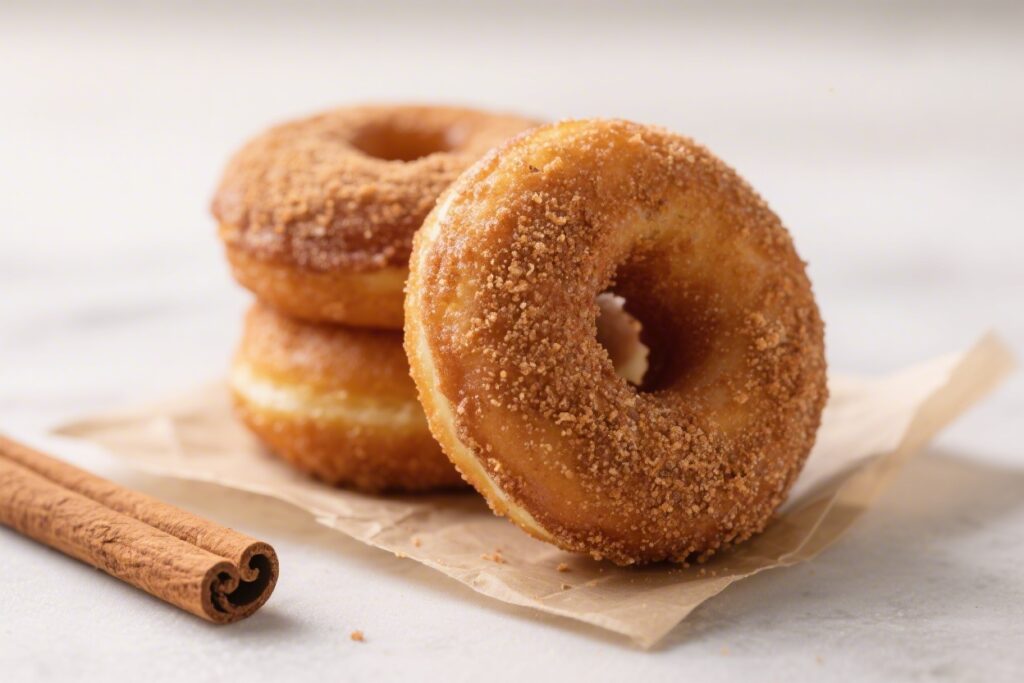
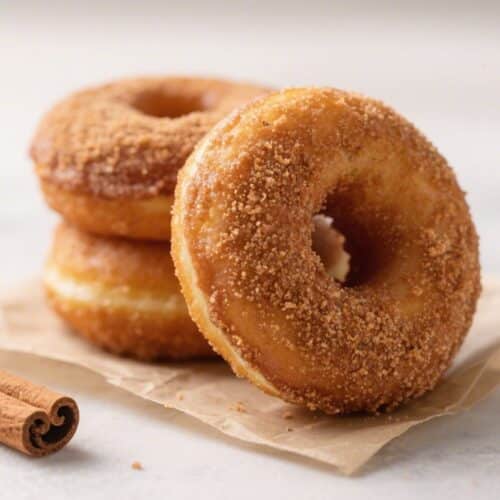
These apple cider doughnuts taste like a crisp fall morning, no matter when you make them. They’re soft inside, golden outside, and generously rolled in warm cinnamon sugar. The apple cider gives them a bright, cozy flavor without being too sweet.
If you’ve only had the farm-stand version, you’ll be surprised how simple they are to make at home. Grab a pot, reduce some cider, and you’re halfway there.
Why This Recipe Works
These doughnuts start with reduced apple cider, which concentrates the flavor and keeps the dough tender. A mix of all-purpose flour and a touch of cornstarch creates a soft crumb with a delicate bite.
Using baking powder and baking soda gives them a gentle lift, so they cook through without drying out. A blend of cinnamon, nutmeg, and vanilla rounds out the warm spice profile that pairs perfectly with the cider. Finally, the cinnamon-sugar coating adds texture and that classic doughnut-shop finish.
Recipe Card
Apple Cider Doughnuts with Cinnamon Coating
Ingredients
- 1 1/2 cups apple cider (not vinegar; unfiltered cider is best)
- 2 1/2 cups all-purpose flour
- 2 tablespoons cornstarch
- 2 teaspoons baking powder
- 1/2 teaspoon baking soda
- 1 teaspoon ground cinnamon
- 1/4 teaspoon ground nutmeg (freshly grated if possible)
- 1/2 teaspoon fine salt
- 6 tablespoons unsalted butter, melted and cooled slightly
- 2/3 cup granulated sugar
- 1/3 cup light brown sugar, packed
- 2 large eggs, at room temperature
- 1/2 cup buttermilk, at room temperature
- 1 teaspoon vanilla extract
- Neutral oil for frying (such as canola or peanut)
For the Cinnamon Coating:
- 3/4 cup granulated sugar
- 2 teaspoons ground cinnamon
- 1/8 teaspoon fine salt (optional, enhances flavor)
- 3 tablespoons unsalted butter, melted (to help coating stick)
Instructions
- Reduce the cider. Pour the apple cider into a small saucepan and simmer over medium heat until reduced to about 1/2 cup, 15–20 minutes. Cool completely. This step intensifies the apple flavor.
- Mix dry ingredients. In a large bowl, whisk flour, cornstarch, baking powder, baking soda, cinnamon, nutmeg, and salt until evenly combined.
- Combine wet ingredients. In another bowl, whisk the melted butter, granulated sugar, and brown sugar until sandy and cohesive. Add eggs, one at a time, then whisk in the cooled reduced cider, buttermilk, and vanilla.
- Bring the dough together. Pour the wet mixture into the dry ingredients. Stir with a spatula until no dry patches remain. The dough will be soft and slightly sticky. Cover and chill 45–60 minutes to firm up for easier handling.
- Prep the coating. Stir together sugar, cinnamon, and salt in a shallow dish. Keep the melted butter in a separate small bowl.
- Heat the oil. In a heavy pot or Dutch oven, heat 2–3 inches of oil to 350°F (175°C). Use a thermometer for accuracy.
- Shape the doughnuts. On a lightly floured surface, pat or roll the dough to about 1/2 inch thick. Cut with a 3-inch doughnut cutter (or use a 3-inch round cutter plus a 1-inch cutter for the holes). Gather scraps and re-roll as needed.
- Fry in batches. Carefully add 3–4 doughnuts to the oil at a time. Fry 1–2 minutes per side until deep golden brown. Keep the oil between 340–360°F for even cooking.
- Drain and coat. Transfer doughnuts to a wire rack set over a sheet pan. While still warm, brush lightly with melted butter, then roll in the cinnamon sugar to coat all sides.
- Fry the holes. Cook doughnut holes for about 1–1 1/2 minutes total, turning once. Coat the same way.
- Serve. Enjoy warm for the best texture and aroma. They’re fantastic with coffee or cold milk.
Storage Instructions
- Room temperature: Store cooled doughnuts in an airtight container for up to 2 days.
Re-coat with a little cinnamon sugar if it absorbs.
- Freezer: Freeze uncoated doughnuts on a tray, then transfer to a freezer bag for up to 2 months. Thaw at room temperature, warm briefly in a 300°F oven, then brush with butter and coat.
- Reheating: Warm in a 300°F oven for 6–8 minutes or air fryer for 3–4 minutes at 320°F to refresh the crust.
Benefits of This Recipe
- Big flavor without fuss: Reducing cider packs in apple notes without needing fresh apples.
- Approachable technique: No yeast or long proofing. The batter-style dough chills and cuts easily.
- Customizable spice level: You control how cinnamon-forward or subtle you want it.
- Bakery-style finish at home: Light, crisp exterior with a soft, cake-like middle.
- Great make-ahead options: Dough can chill overnight, and the doughnuts freeze well.
Pitfalls to Watch Out For
- Skipping the cider reduction: This waters down the flavor and can make the dough too wet.
- Over-mixing: Stir just until combined.
Overworking the dough makes tough doughnuts.
- Oil too hot or cold: Too hot burns the outside before the center cooks; too cold makes greasy doughnuts. Keep a thermometer in the pot.
- Cutting too thin: If the dough is less than 1/2 inch thick, the texture won’t be as plush.
- Coating too late: Cinnamon sugar sticks best while the doughnuts are still warm.
Recipe Variations
- Baked Version: Use a greased doughnut pan. Pipe batter into molds and bake at 350°F for 10–12 minutes.
Brush with butter and coat after baking. Texture will be lighter and more cake-like.
- Maple Glaze: Skip the cinnamon sugar and dip warm doughnuts in a glaze made with 1 cup powdered sugar, 2–3 tablespoons maple syrup, and 1–2 teaspoons milk.
- Cider Spice Boost: Add 1/4 teaspoon ground cloves and swap vanilla for 1/2 teaspoon apple extract for a stronger apple aroma.
- Brown Butter Twist: Brown the butter before adding it to the batter for a nutty depth. Cool it first.
- Cinnamon-Sugar Crunch: Stir a teaspoon of very fine lemon zest into the cinnamon sugar for a bright, subtle lift.
FAQ
Can I make the dough ahead?
Yes.
Cover and chill the dough for up to 24 hours. If it feels too firm when you’re ready to roll, let it sit at room temperature for 10–15 minutes until pliable.
What can I use instead of buttermilk?
Mix 1/2 cup whole milk with 1 1/2 teaspoons lemon juice or vinegar and let it sit for 5 minutes. Or use plain kefir or a thin, drinkable yogurt.
Do I need a doughnut cutter?
No.
Use a 3-inch round cutter or a glass for the outer ring and a small bottle cap or 1-inch cutter for the hole. You can also fry as rings or simple rounds.
How do I know they’re cooked through?
They should be deep golden brown and feel light, not heavy or greasy. If you’re unsure, use an instant-read thermometer; the center should reach about 200°F for cake doughnuts.
Can I bake instead of fry?
Yes.
The texture will be closer to a muffin or cake doughnut, not as crisp. Grease the pan well, don’t overbake, and coat while warm for the best result.
Which oil is best for frying doughnuts?
Choose a neutral, high-smoke-point oil like canola, peanut, or refined sunflower. Avoid olive oil or anything with a strong flavor.
Why is my coating melting?
If the doughnuts are too hot or too moist, the sugar can dissolve.
Let them cool for 1–2 minutes, brush lightly with butter, then roll in sugar for a crisp finish.
Can I use apple juice instead of cider?
You can, but cider has more body and flavor. If using juice, reduce it to a bit less than 1/2 cup to boost the apple taste.
Wrapping Up
Apple Cider Doughnuts with Cinnamon Coating bring that farm-stand magic to your own kitchen. The reduced cider, warm spices, and crisp-sugar finish make them truly special.
Keep an eye on your oil temp, coat while warm, and you’ll get that ideal tender bite every time. Whether you fry a fresh batch for brunch or stash some in the freezer, this recipe delivers cozy comfort whenever you want it.