
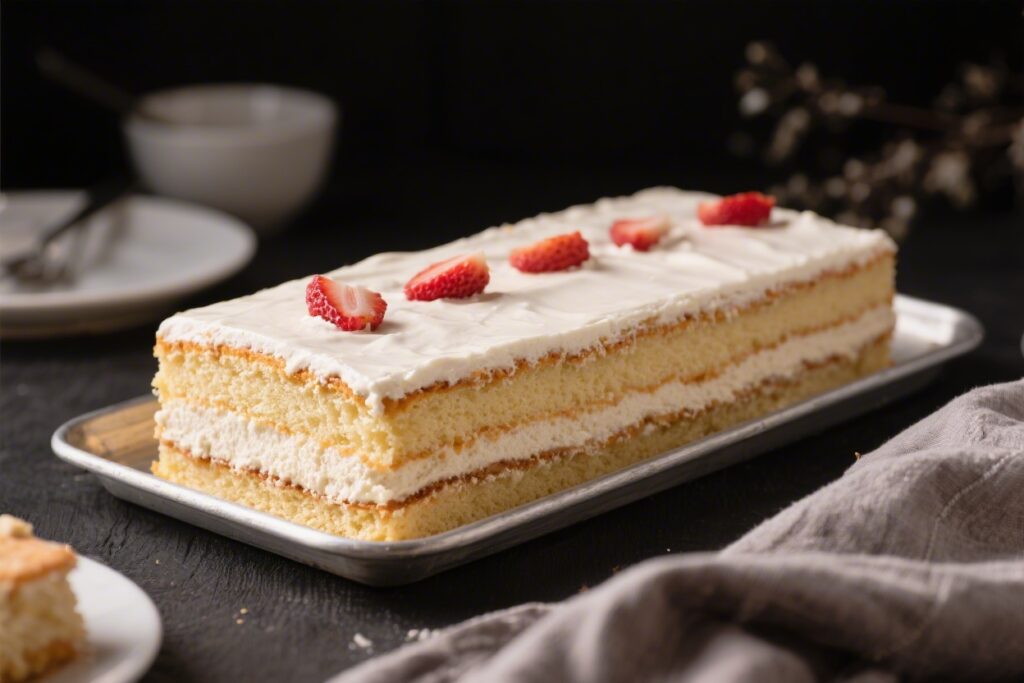
There’s something comforting about a Victoria sponge. It’s unfussy, nostalgic, and exactly the kind of bake that disappears quickly at gatherings. This traybake version keeps the spirit of the classic while making it easy to slice and share.
The cake is light and buttery, layered with jam and a cloud of cream. It’s just the thing for birthdays, afternoon tea, or a quick weekend bake when you want something reliable and lovely.
What Makes This Special
This traybake keeps all the charm of a traditional Victoria sponge, but you don’t have to fuss with round tins or stacking layers. It bakes in one pan, cools evenly, and slices neatly.
The texture is soft and tender thanks to a balanced mix of butter, sugar, eggs, and self-raising flour. A simple filling of jam and softly whipped cream gives sweetness without being heavy. It’s the kind of cake that tastes homemade in the best way—light, fresh, and not too sweet.
Ingredients
- For the sponge:
- 225 g unsalted butter, softened (plus extra for greasing)
- 225 g caster sugar
- 1 tsp vanilla extract
- 4 large eggs, at room temperature
- 225 g self-raising flour
- 2 tbsp milk (more if needed, to loosen)
- A pinch of fine salt
- For the filling and finish:
- 200–250 g good-quality strawberry or raspberry jam
- 250 ml double cream (heavy cream), cold
- 1–2 tbsp icing sugar (powdered sugar), plus extra for dusting
- 1 tsp vanilla extract (optional)
- Fresh berries for serving (optional)
- Equipment:
- 1 rectangular traybake tin (about 23 x 33 cm / 9 x 13 inches)
- Baking parchment
- Electric hand mixer or stand mixer (optional, but helpful)
- Wire rack for cooling
Instructions
- Prep the tin and oven. Heat the oven to 180°C (160°C fan) / 350°F.Grease the traybake tin and line it with baking parchment, letting it overhang the sides for easy lifting.
- Cream the butter and sugar. In a large bowl, beat the softened butter, caster sugar, and vanilla for 2–3 minutes until pale and fluffy. This step is key for a light sponge.
- Add the eggs. Beat in the eggs one at a time, mixing well after each addition. If the mixture looks curdled, add a tablespoon of the flour and keep mixing until it comes back together.
- Fold in the dry ingredients. Sift in the self-raising flour and salt.Gently fold with a spatula until just combined. Add the milk and fold again. The batter should be soft and drop off a spoon easily.
If it seems too thick, add another splash of milk.
- Spread and level. Spoon the batter into the prepared tin. Use a spatula to spread it into the corners and level the top so it bakes evenly.
- Bake. Bake for 20–25 minutes until risen, golden, and springy to the touch. A skewer should come out clean from the center.
- Cool completely. Leave the cake in the tin for 10 minutes, then lift it out onto a wire rack to cool fully.Don’t add the filling while warm or it will melt.
- Whip the cream. In a cold bowl, whip the double cream with 1–2 tbsp icing sugar and vanilla (if using) to soft peaks. It should hold its shape but still look smooth and billowy.
- Add the jam. Once the cake is cool, place it on a board. Spread the jam evenly over the top.If your jam is stiff, stir it first to loosen or warm it slightly.
- Top with cream. Dollop the whipped cream over the jam and gently spread. Don’t press too hard or the layers will mix.
- Finish and serve. Dust lightly with icing sugar. If you like, add a few fresh berries.Slice into neat squares and serve.
Storage Instructions
If filled with cream, store the traybake in the fridge, covered, for up to 2 days. The sponge alone (without cream) can be wrapped and kept at room temperature for up to 3 days or frozen for up to 2 months. If freezing, wrap the plain sponge tightly in cling film and foil.
Defrost at room temperature, then add jam and cream just before serving. For best texture, let chilled slices sit out for 15 minutes before eating.
Why This is Good for You
This isn’t a health food, but it does offer some simple wins. The portion control is built in—small squares feel satisfying without going overboard.
Using real butter and cream gives flavor that doesn’t need heavy frosting. Fresh berries add brightness and a touch of vitamin C. And baking at home means you know exactly what’s in it—no mysterious additives, just classic, familiar ingredients.
Pitfalls to Watch Out For
- Overmixing the batter: Once the flour is in, fold gently.Overmixing tightens the crumb and makes the cake dense.
- Cold ingredients: Butter and eggs should be at room temperature so they blend smoothly. Cold butter won’t cream properly.
- Wrong tin size: A much smaller tin will cause overflow; a much larger one makes a thin, dry cake. Stick close to 23 x 33 cm.
- Underbaking or overbaking: Check from 20 minutes.The cake should spring back and the skewer should come out clean.
- Filling too soon: If the cake is even slightly warm, the cream will slump and the jam may soak in.
- Overwhipped cream: Stop at soft peaks. Overwhipped cream turns grainy and can separate.
Variations You Can Try
- Lemon Victoria: Add the zest of 2 lemons to the batter and swap the jam for lemon curd. A little extra lemon zest in the cream is lovely.
- Strawberries and cream: Add sliced fresh strawberries over the jam layer just before the cream.
- Raspberry and almond: Fold 50 g ground almonds into the flour and use raspberry jam.Scatter toasted flaked almonds on top.
- Vanilla bean: Use the seeds from half a vanilla pod in both cake and cream for a fragrant boost.
- Buttercream swap: If you need the cake to hold longer at room temperature, use a simple vanilla buttercream instead of whipped cream.
- Gluten-free: Use a good 1:1 gluten-free self-raising flour blend and add 1–2 tbsp milk if needed to loosen the batter.
FAQ
Can I make this the day before?
Yes. Bake the sponge the day before, wrap it well, and store at room temperature. Add the jam and cream on the day you plan to serve for the best texture.
What if I don’t have self-raising flour?
Use plain (all-purpose) flour and add 2 tsp baking powder per 225 g of flour, plus the pinch of salt.
Sift well to distribute the leavening evenly.
How do I know the cake is done?
It should be golden, spring back when gently pressed, and a skewer inserted into the center should come out clean. If there’s any wet batter, give it a few more minutes.
Can I use buttercream instead of whipped cream?
Absolutely. A simple vanilla buttercream holds up better in warm weather and for lunchboxes.
Spread a thin layer so the cake doesn’t become too sweet.
Which jam works best?
Strawberry is classic, but raspberry brings a nice tartness. Choose a good-quality jam with plenty of fruit. If it’s very thick, loosen it slightly so it spreads without tearing the cake.
How do I prevent the cake from doming?
Make sure your oven isn’t too hot and level the batter before baking.
If there’s a slight dome, you can gently press it down with a clean tea towel a minute after it comes out of the oven, then cool as usual.
Can I halve the recipe?
Yes. Bake in a smaller tin, like 20 x 20 cm (8 x 8 inches). Check for doneness earlier—around 16–20 minutes—since it may bake faster.
Wrapping Up
This Classic Victoria Sponge Traybake is everything you want from a home bake: simple to make, soft and buttery, and easy to serve to a crowd.
It looks pretty with a dusting of icing sugar, but it’s the taste that wins people over—light sponge, bright jam, and cool cream. Keep this recipe in your back pocket for birthdays, school events, or when you just want a dependable cake that never disappoints. Once you’ve made it once, you’ll find yourself coming back to it again and again.