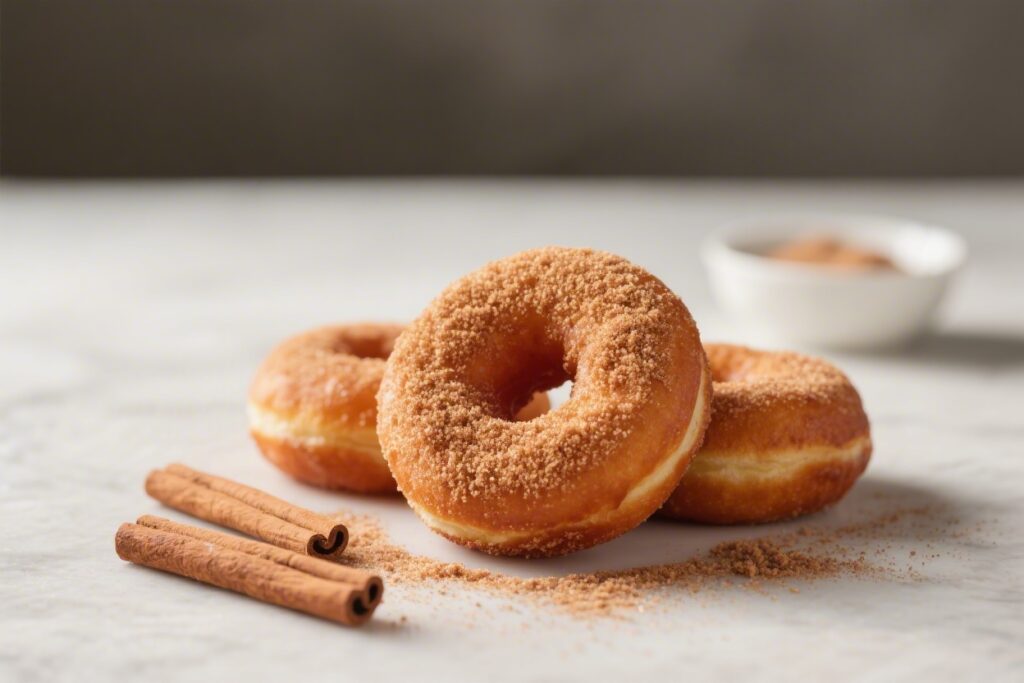
Old-fashioned doughnuts feel like a warm hug in pastry form. They’re craggy on the outside, tender inside, and finished with a simple, sparkly coat of cinnamon sugar. No yeast, no waiting—just quick mixing, easy shaping, and a short fry.
If you love the classic bakery style with those charming ridges that catch every bit of sugar, this recipe brings that magic home. Grab a cup of coffee and let’s make a batch you’ll want to repeat.
Why This Recipe Works
- Buttermilk and sour cream keep the dough moist and tender, giving the doughnuts that signature old-fashioned tang.
- Cake flour lowers the protein level, which helps create a softer crumb and the delicate crackly edges during frying.
- Double leavening with baking powder in the dough and moisture evaporation in the fryer ensures lift without yeast.
- Rested dough relaxes the gluten slightly, making it easier to roll and cut while holding its shape in hot oil.
- Two-stage frying—starting lower, then finishing hotter—develops those ridges and prevents greasy centers.
Recipe Card
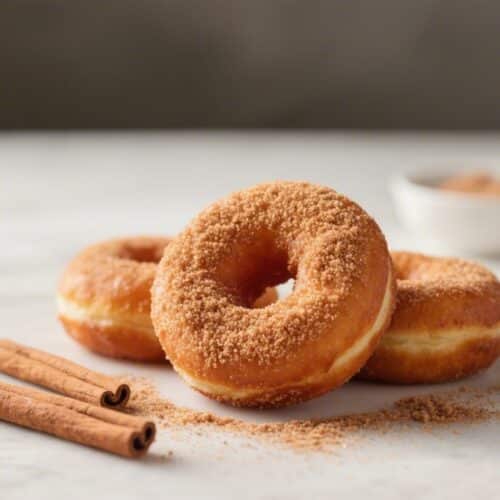
Cinnamon Sugar Old-Fashioned Doughnuts
Ingredients
- 2 1/2 cups cake flour, plus more for dusting
- 1 1/2 teaspoons baking powder
- 1/2 teaspoon baking soda
- 3/4 teaspoon fine salt
- 1 teaspoon ground nutmeg (freshly grated if possible)
- 1/2 cup granulated sugar
- 3 tablespoons unsalted butter, melted and cooled slightly
- 1 large egg, at room temperature
- 1 teaspoon vanilla extract
- 1/2 cup sour cream, at room temperature
- 1/3 cup buttermilk, well shaken
- Neutral oil for frying (vegetable, canola, or peanut), enough for 2–3 inches in a heavy pot
For the cinnamon sugar:
- 3/4 cup granulated sugar
- 2–3 teaspoons ground cinnamon (to taste)
- Pinch of salt
Instructions
- Set up for success. Line a baking sheet with parchment and dust lightly with flour. Set a wire rack over another sheet for draining after frying. Mix the cinnamon sugar in a shallow bowl and set aside.
- Mix dry ingredients. In a medium bowl, whisk cake flour, baking powder, baking soda, salt, and nutmeg until well combined.
- Whisk wet ingredients. In a large bowl, whisk sugar, melted butter, egg, and vanilla until smooth. Add sour cream and buttermilk and whisk until creamy.
- Bring the dough together. Add dry ingredients to the wet and fold with a spatula just until no dry pockets remain. The dough will be soft and slightly sticky. Avoid overmixing.
- Rest and chill. Turn dough onto the prepared parchment. Dust lightly with flour, pat into a 3/4-inch-thick slab, and cover with plastic. Chill 30–45 minutes to firm up for easier cutting.
- Cut the doughnuts. Dust the top with flour and use a 3-inch doughnut cutter (or two round cutters, 3-inch and 1-inch) to cut as many doughnuts as possible. Transfer to the parchment-lined sheet. Gently press scraps together, pat, and cut again once more. Avoid over-handling.
- Heat the oil. Pour oil into a heavy pot or Dutch oven to a depth of 2–3 inches. Heat to 340°F (171°C). Keep a thermometer clipped to the side for accuracy.
- First fry for structure. Fry 2–3 doughnuts at a time, about 1–1 1/2 minutes per side, keeping the oil between 335–345°F. They should puff and develop slight cracks. Remove to the wire rack to rest 1 minute.
- Second fry for crisp ridges. Increase oil to 360°F (182°C). Return doughnuts to the oil for 30–45 seconds per side until deep golden with craggy edges. Drain on the rack.
- Coat while warm. When the doughnuts are cool enough to handle but still warm, toss generously in cinnamon sugar. Coat doughnut holes too—cook them about 1 minute total, turning often.
- Serve. Enjoy right away for the best texture. They’re fantastic with coffee or hot chocolate.
Keeping It Fresh
- Same-day is best. Old-fashioned doughnuts are at their peak within a few hours of frying.
- Short-term storage: Keep in an airtight container at room temperature up to 24 hours. Refresh by warming in a 300°F oven for 5–7 minutes.
- Freezing: Freeze uncoated doughnuts in a single layer until solid, then transfer to a bag for up to 1 month.
Thaw at room temp and re-crisp in a 325°F oven for 6–8 minutes, then coat in fresh cinnamon sugar.
- Avoid the fridge. Refrigeration can dry them out and dull the crust.
Health Benefits
These are a treat, but you can still make small choices that help. Using neutral oils with a high smoke point supports cleaner frying and less breakdown. Keeping oil at the right temperature prevents excess absorption, so the doughnuts aren’t greasy.
Portion size matters.
One doughnut can satisfy the craving, especially paired with protein like eggs or yogurt to balance your snack. If you need to adjust for dietary needs, you can reduce the sugar in the coating or split doughnuts into mini sizes for built-in portion control.
Common Mistakes to Avoid
- Oil too cool. If the temperature drops, doughnuts soak up oil. Fry in small batches and monitor with a thermometer.
- Overmixing the dough. This toughens the crumb and reduces those classic cracks.
Fold just until combined.
- Skipping the chill. Warm, soft dough spreads in the oil and loses shape. A short chill keeps edges defined.
- Cutting too thin. Aim for 3/4-inch thickness for good lift and texture.
- Coating too late. Cinnamon sugar sticks best when the doughnuts are warm, not hot or fully cooled.
Recipe Variations
- Brown butter doughnuts: Swap melted butter for browned butter to add a nutty, toffee-like depth.
- Maple spice sugar: Mix granulated sugar with a little maple sugar and add a pinch of allspice or clove.
- Citrus twist: Add 1 teaspoon orange or lemon zest to the dough for a fragrant lift.
- Gluten-friendly attempt: Use a 1:1 gluten-free baking flour that includes starches and xanthan gum. Expect a slightly more delicate dough.
- Baked “fake-out” version: Pipe the dough into a greased doughnut pan and bake at 350°F for 12–15 minutes.
Texture won’t be craggy, but it’s a lighter take.
FAQ
Can I use all-purpose flour instead of cake flour?
Yes, but expect a slightly firmer texture. To mimic cake flour, replace 2 tablespoons of each cup of all-purpose flour with cornstarch and whisk well. Still, cake flour delivers the most tender crumb.
What oil is best for frying?
Use a neutral oil with a high smoke point, such as canola, vegetable, or peanut oil.
They stay stable at frying temperatures and won’t overpower the flavor.
Why do my doughnuts look flat?
Likely causes are warm dough, oil that’s too cool, or dough cut too thin. Chill the dough, keep oil in the correct range, and aim for 3/4-inch thickness when cutting.
How do I avoid raw centers?
Use the two-stage fry: start around 340°F to cook through, rest briefly, then finish at 360°F to crisp. Also avoid overcrowding, which drops the oil temperature.
Can I make the dough ahead?
Yes.
Cover and refrigerate up to 12 hours. Let it sit at room temperature for 10–15 minutes before rolling and cutting if it’s too firm.
What can I do with the doughnut holes?
Fry them for about 1 minute total, turning frequently, then coat in cinnamon sugar. They’re perfect for snacking or sharing.
Is there a glaze option instead of cinnamon sugar?
Absolutely.
Whisk 1 cup powdered sugar with 2–3 tablespoons milk and 1/2 teaspoon vanilla until smooth. Dip warm doughnuts, let excess drip, and set on a rack.
In Conclusion
Cinnamon Sugar Old-Fashioned Doughnuts are all about simple ingredients, gentle technique, and that irresistible crackly exterior. With a quick mix, a short chill, and careful frying, you’ll get bakery-worthy results at home.
Keep the oil steady, coat while warm, and enjoy them the day they’re made. It’s a cozy classic you’ll come back to again and again.