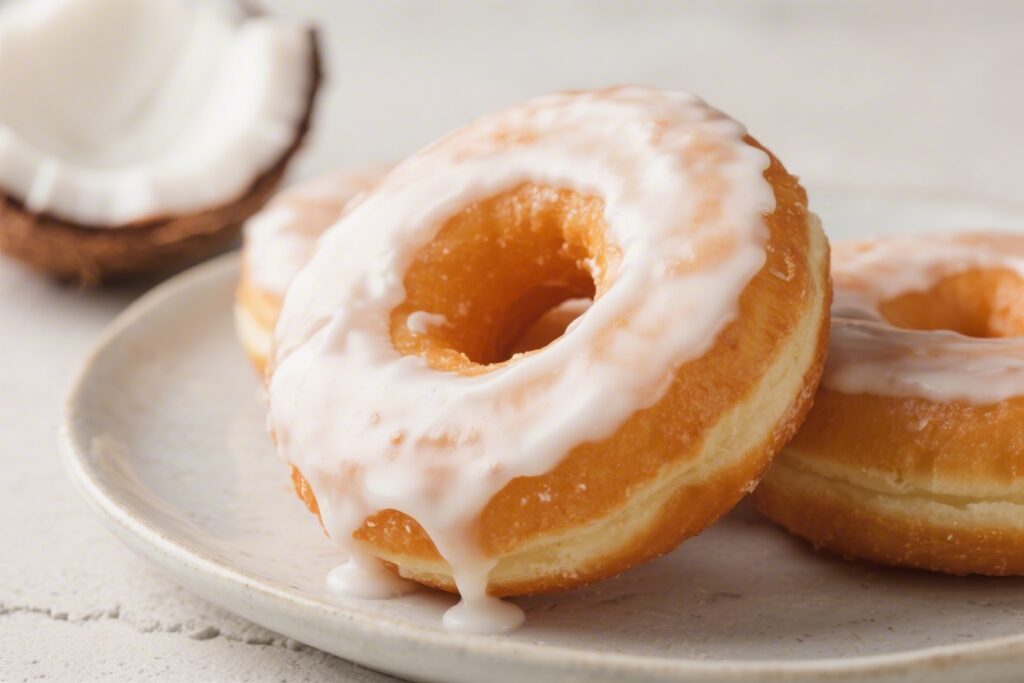
Coconut glazed doughnuts are the kind of treat that makes a morning feel special. They’re soft, pillowy, and finished with a glossy coconut glaze that sets just right. You get a little vanilla, a hint of coconut, and that perfect bite that melts in your mouth.
These doughnuts are easy enough for a weekend project and impressive enough to share. If you love classic bakery-style doughnuts with a tropical twist, you’re in the right place.
What Makes This Recipe So Good
- Light and fluffy texture: The dough rises beautifully, giving you that tender, airy crumb.
- Balanced coconut flavor: The glaze uses coconut milk and shredded coconut for a clean, natural taste—not overpowering, just right.
- Foolproof method: Straightforward steps, clear timing, and common ingredients keep it stress-free.
- Bakery-style look: A glossy glaze and snowy coconut topping make these look like they came from a pastry case.
- Make-ahead friendly: You can prep the dough the night before and fry the next morning.
Recipe Card
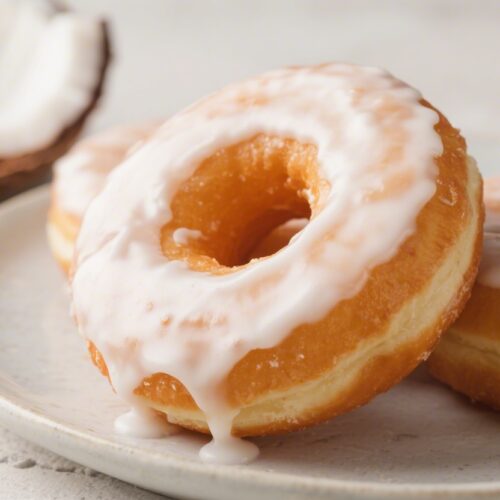
Coconut Glazed Doughnuts
Ingredients
- All-purpose flour – for the doughnut dough
- Granulated sugar – sweetens the dough
- Active dry yeast – helps the dough rise
- Whole milk – warms and enriches the dough
- Unsalted butter – adds softness and flavor
- Large eggs – structure and richness
- Salt – balances sweetness
- Vanilla extract – warm bakery aroma
- Neutral oil for frying – canola, peanut, or vegetable oil
- Powdered sugar – for the glaze
- Coconut milk – full-fat for a creamy glaze
- Shredded coconut – sweetened or unsweetened, for topping
- Coconut extract (optional) – for extra coconut punch
Instructions
- Warm the milk: Heat 3/4 cup of whole milk until it’s warm to the touch, about 105–110°F. If it feels hot, let it cool a minute.
- Bloom the yeast: Stir 2 teaspoons active dry yeast and 1 tablespoon sugar into the warm milk. Let it sit 5–10 minutes until foamy. If it doesn’t foam, start over with fresh yeast.
- Mix the wet ingredients: In a large bowl, whisk 1/4 cup melted unsalted butter (cooled), 1/4 cup sugar, 1 teaspoon vanilla, 1 large egg, and 1 egg yolk. Add the foamy yeast mixture and stir.
- Build the dough: Add 2 3/4 to 3 cups all-purpose flour and 1/2 teaspoon salt to the bowl. Stir with a spoon or use a stand mixer with a dough hook. The dough should be soft and slightly tacky, not sticky.
- Knead: Knead by hand on a lightly floured surface for 6–8 minutes (or 4–5 minutes in a mixer) until smooth and elastic. Add small sprinkles of flour only if it sticks.
- First rise: Place dough in a greased bowl, cover, and let it rise in a warm spot until doubled, about 60–90 minutes.
- Shape the doughnuts: Gently deflate the dough and roll it to about 1/2-inch thick. Cut out 3-inch rounds with a doughnut cutter or a round cutter and a small cap for the center hole. Re-roll scraps once if needed.
- Second rise: Place cut doughnuts on parchment-lined trays. Cover lightly and let rise until puffy, 30–45 minutes. They should look airy and spring back slowly when touched.
- Heat the oil: In a heavy pot, heat 2–3 inches of oil to 350°F. Keep a thermometer clipped on to maintain temperature.
- Fry: Fry 2–3 doughnuts at a time, 45–60 seconds per side, until golden. Don’t overcrowd. Transfer to a wire rack set over a sheet pan. Fry holes too—they take about 30 seconds per side.
- Make the coconut glaze: In a bowl, whisk 2 cups powdered sugar with 1/3 cup full-fat coconut milk until smooth and pourable. Add 1/4 teaspoon vanilla and a few drops of coconut extract if using. Adjust with more sugar to thicken or more coconut milk to thin.
- Dip and sprinkle: While doughnuts are slightly warm, dip the tops into the glaze, let excess drip, then sprinkle immediately with shredded coconut so it sticks. Set back on the rack to let the glaze set.
- Serve: Enjoy warm or at room temperature. The glaze firms up in about 20 minutes.
Keeping It Fresh
- Same-day is best: Doughnuts taste their best within hours of frying.
- Short-term storage: Keep in an airtight container at room temperature for up to 2 days.
Add a small piece of bread in the container to help maintain softness.
- Freezing unglazed: Freeze unglazed doughnuts in a single layer, then bag for up to 2 months. Thaw at room temp and glaze fresh.
- Reviving texture: Warm unglazed doughnuts in a 300°F oven for 4–5 minutes. Glaze after warming.
Why This is Good for You
- Portion control with satisfaction: A homemade doughnut can be more satisfying than store-bought, helping you enjoy a treat without overdoing it.
- Cleaner ingredients: You choose the oil, avoid preservatives, and can reduce sweetness in the glaze if you prefer.
- Coconut perks: Coconut milk adds richness and a hint of natural flavor, so you can skip heavy artificial flavorings.
- Mood and connection: Baking projects can be calming and fun to share.
That feel-good factor counts.
What Not to Do
- Don’t overheat the milk: Hot milk kills yeast. Aim for warm, not hot.
- Don’t add too much flour: A stiff dough makes dense doughnuts. Keep it soft and slightly tacky.
- Don’t rush the rise: Under-proofed dough won’t puff in the oil.
Wait for that airy, slightly wobbly look.
- Don’t fry too cool or too hot: Below 340°F leads to greasy doughnuts; above 360°F burns the outside and leaves the center raw.
- Don’t glaze cold doughnuts: The glaze adheres better when they’re slightly warm.
Variations You Can Try
- Toasted coconut crunch: Toast shredded coconut in a dry skillet until golden, then sprinkle on the fresh glaze for nutty depth.
- Lime-coconut glaze: Add lime zest and a teaspoon of lime juice to the glaze for a bright, tropical edge.
- Chocolate dip: Dip half the doughnut in melted dark chocolate, then sprinkle with coconut. It sets into a shiny shell.
- Baked version: Use a yeasted or cake-style baked doughnut batter in a doughnut pan. Brush warm with coconut milk glaze.
- Filled twist: Skip the center hole, fry as rounds, and pipe in coconut pastry cream.
Dust with coconut sugar instead of glaze.
- Dairy-free: Use plant milk in the dough and coconut oil instead of butter. The glaze is already dairy-free.
FAQ
Can I make the dough the night before?
Yes. After the first rise, punch down the dough, cover tightly, and refrigerate overnight.
Shape, rise again at room temperature until puffy, then fry.
What oil is best for frying?
Use a neutral, high-smoke-point oil like canola, peanut, or vegetable oil. These stay stable at 350°F and won’t overpower the coconut flavor.
How do I know the dough is kneaded enough?
It should feel smooth and elastic, and a small piece can stretch thin without tearing easily. If using a mixer, the dough will pull away from the bowl but still feel soft.
Why are my doughnuts greasy?
The oil was too cool, or the dough was under-proofed.
Keep oil at 350°F and let the doughnuts get visibly puffy before frying.
Can I use coconut flour?
No. Coconut flour absorbs too much liquid and will ruin the texture. Stick with all-purpose flour for reliable results.
What if I don’t have coconut milk?
Use whole milk in the glaze and add a drop or two of coconut extract.
The flavor won’t be as creamy, but it still works.
How thick should the glaze be?
Aim for pourable but opaque. When you lift the spoon, it should ribbon back into the bowl and slowly disappear within a few seconds.
Do I need a doughnut cutter?
No. Use a 3-inch round cutter or a glass for the outer ring and a bottle cap or small cutter for the hole.
Wrapping Up
Coconut glazed doughnuts bring a gentle tropical note to a classic treat.
With a soft crumb, glossy coconut glaze, and that snowy sprinkle on top, they’re both simple and special. Follow the timing, keep your oil steady, and you’ll have bakery-quality doughnuts at home. Brew some coffee, invite a friend, and enjoy them warm while the glaze is just set—that’s the sweet spot.