If you have ever followed a cake recipe and reached the instruction “fold in the flour,” you might have paused for a moment wondering what that actually means. Unlike stirring or mixing, folding is a technique that many recipes mention but rarely explain. For beginner bakers, it can feel a little mysterious.
Folding is simply a gentle way of combining ingredients so you keep as much air in the batter as possible. That air is what helps cakes rise beautifully in the oven and gives them that soft, light texture everyone loves. When flour is mixed too aggressively, those tiny air bubbles collapse and the batter can quickly turn heavy, leading to dense or rubbery cakes.
The good news is that folding is a very easy technique once you understand the motion. You do not need special skills or complicated tools, just a spatula and a little patience.
In this guide, you will learn exactly what folding means in baking, why it is so important for light cakes, and the simple step by step technique that keeps your batter fluffy instead of flat. Once you get the hang of it, folding flour will become one of the easiest parts of baking.
What Does “Fold” Mean in Baking?
In baking, folding is a gentle mixing technique used to combine ingredients without knocking the air out of the batter. Instead of stirring quickly or beating with a mixer, folding carefully lifts and turns the batter so everything blends together while keeping it light and fluffy.
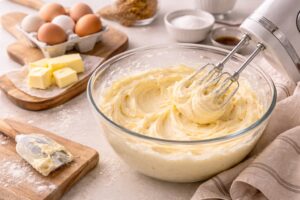
You will often see the instruction “fold in the flour” near the end of a recipe. By this point, the batter has usually already been creamed or whipped, which means it contains lots of tiny air bubbles. Those air bubbles help cakes rise in the oven and create that soft, tender texture. Folding protects those bubbles so the batter stays airy.
This technique is commonly used in recipes like:
- Sponge cakes
- Light vanilla cakes
- Muffins and quick breads
- Whipped cream desserts
- Mousses and airy fillings
The key difference between folding and other mixing methods is gentleness.
Mixing or stirring usually involves circular motions that fully blend ingredients but can knock out air.
Folding uses a slow lifting motion that combines ingredients gradually while keeping the batter light.
Because of this, folding is usually done with a silicone spatula rather than a whisk or electric mixer. A spatula allows you to scoop from the bottom of the bowl and gently turn the batter over itself without overworking it.
Once you understand this simple idea, the instruction “fold in the flour” stops feeling confusing and becomes just another easy step in the baking process.
Why Folding Flour Matters for Light Cakes
When a recipe asks you to fold in the flour, it is usually because the batter already contains a lot of trapped air. This air is created earlier in the recipe through techniques like creaming butter and sugar or whisking eggs. Those tiny air bubbles are incredibly important because they help cakes rise and create that soft, fluffy texture.
If the flour is mixed in too aggressively, those air bubbles quickly collapse. Instead of a light batter, you end up with a heavier mixture that can bake into a dense cake.
Another reason gentle folding matters is gluten development. Flour contains proteins that form gluten when mixed. A little gluten gives structure to baked goods, but too much mixing can make cakes tough or rubbery. Folding the flour slowly helps combine the ingredients while keeping gluten development minimal.
This is why many cake recipes separate the mixing stages. First, ingredients are creamed or whipped to add air. Then the flour is folded in carefully so that structure is added without losing that light texture.
In simple terms, folding helps you keep the best of both worlds. The flour is incorporated so the cake holds together, but the batter stays airy enough to bake into a soft, tender crumb.
The Simple Folding Technique (Step by Step)
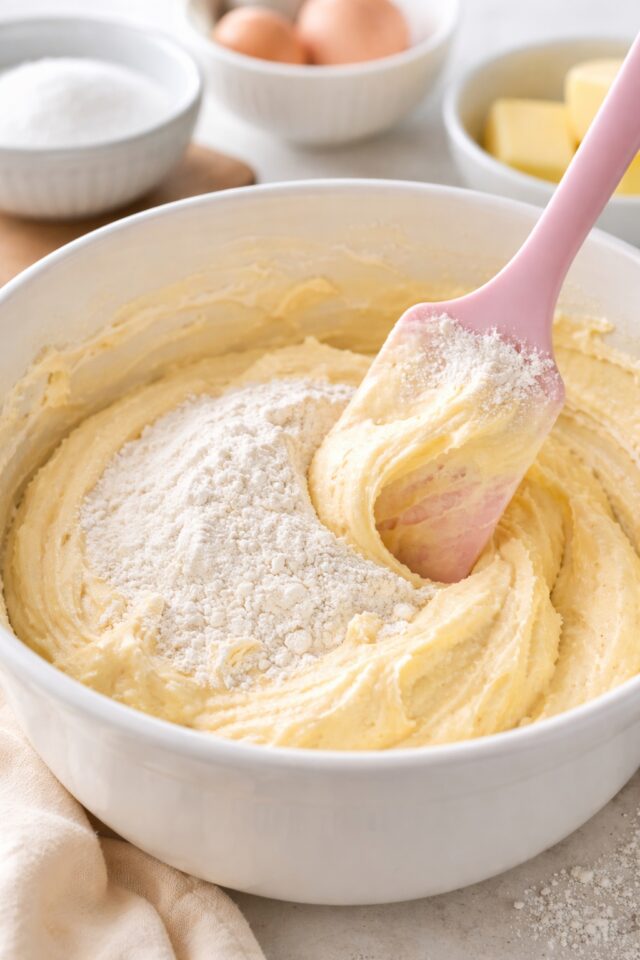
Now that you understand why folding matters, let’s look at the actual technique. The good news is that it is much easier than it sounds. Once you get the motion right, it quickly becomes second nature.
For best results, use a silicone spatula and a large mixing bowl. A spatula lets you gently move through the batter without crushing the air bubbles that help cakes stay light.
Follow this simple step by step method.
1. Add the flour gradually
Instead of adding all the flour at once, sprinkle it over the top of the batter in a few additions. This helps it combine more easily and prevents heavy pockets of flour.
2. Cut through the centre of the batter
Hold your spatula vertically and gently cut down through the middle of the batter until you reach the bottom of the bowl.
3. Scoop underneath the mixture
Once the spatula reaches the bottom, slide it along the base of the bowl and scoop the batter up from underneath.
4. Lift and fold the batter over the top
Bring the spatula up the side of the bowl and gently fold the batter over the flour on the surface.
5. Rotate the bowl and repeat
Turn the bowl slightly and repeat the same motion. This cut, scoop, and fold movement slowly incorporates the flour while keeping the batter airy.
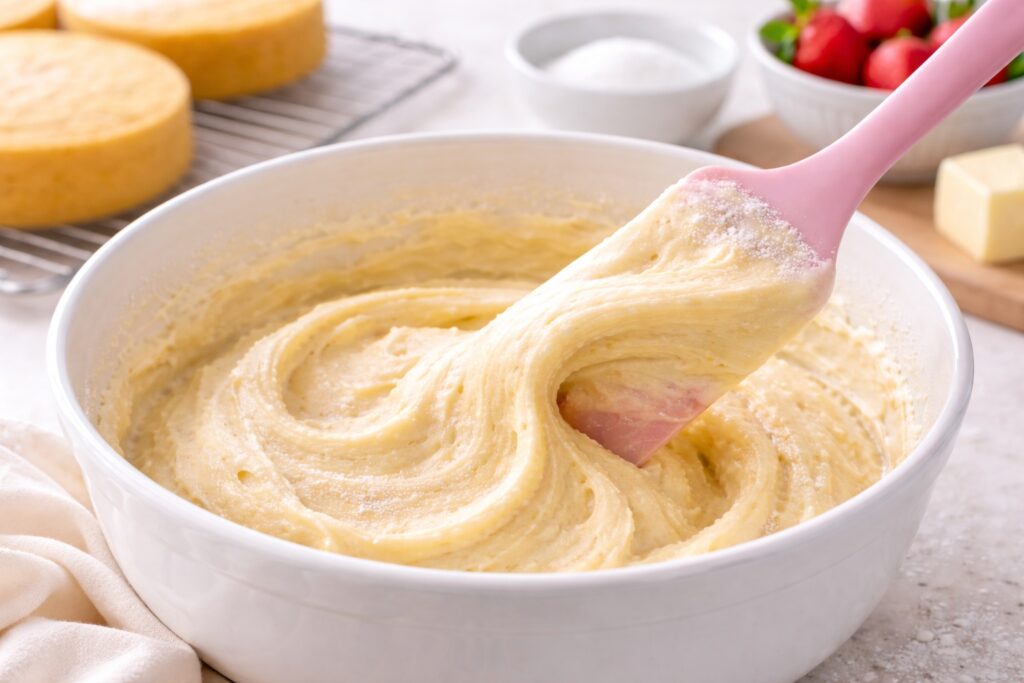
Continue folding just until the flour disappears. The goal is to combine everything without overworking the batter. A few faint streaks of flour are completely fine and will disappear during baking.
Once you have done this a couple of times, the folding motion will feel natural and quick, making this step one of the easiest parts of baking.
How to Tell When You’ve Folded Enough
One of the most common questions beginner bakers have is how to know when to stop folding. Because the technique is gentle, it can be tempting to keep mixing until the batter looks perfectly smooth. In reality, stopping at the right moment is what keeps your cake light and fluffy.
The batter is ready when the flour has just been incorporated. You should no longer see dry pockets of flour, but the mixture should still look airy and soft.
Look for these signs that you have folded enough:
- The visible flour streaks have mostly disappeared
- The batter still looks light and fluffy
- The mixture falls slowly from the spatula rather than dropping heavily
It is completely normal to see a few faint streaks of flour. These will finish blending as the batter settles in the cake pan and begins baking.
On the other hand, if the batter starts to look thick, heavy, or overly smooth, it may have been mixed too much. Overmixed batter often loses its airy texture and can bake into a dense cake.
A good rule to remember is this: stop folding as soon as the flour is incorporated. The less you handle the batter, the lighter your cake will be.
Common Folding Mistakes Beginners Make
Folding is a simple technique, but there are a few small mistakes that can quickly turn a light batter into a heavy one. Knowing what to watch for makes it much easier to get great results every time.
Here are some of the most common folding mistakes and how to avoid them.
Stirring instead of folding
One of the biggest mistakes is using a fast circular stirring motion. Stirring pushes the air out of the batter, which can lead to dense cakes. Instead, remember the gentle cut, scoop, and fold motion that lifts the batter over itself.
Using the wrong tool
Whisks and electric mixers are great for whipping ingredients, but they are too aggressive for folding. A silicone spatula is the best tool because it allows you to move slowly through the batter and scrape the bowl gently.
Adding all the flour at once
Dumping the entire amount of flour into the bowl can make it harder to combine evenly. It often leads to overmixing because you need more stirring to remove dry pockets. Adding the flour in smaller amounts makes folding much easier.
Mixing until the batter is perfectly smooth
Many beginners keep folding because they want the batter to look completely smooth. In reality, this usually means the batter has been overworked. Once the flour is incorporated and there are no large dry patches, it is time to stop.
By avoiding these small mistakes, you will keep more air in the batter and give your cakes the best chance to bake up soft, fluffy, and beautifully light.
Best Tools for Folding Batter
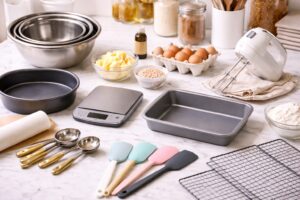
You do not need lots of fancy equipment to fold ingredients properly. A few simple kitchen tools will make the process much easier and help keep your batter light and airy.
Silicone spatula
A flexible silicone spatula is the best tool for folding batter. The soft edge glides along the sides and bottom of the bowl so you can gently scoop and lift the mixture without knocking the air out. It also helps scrape every bit of batter from the bowl so nothing goes to waste.
A good option is a durable silicone spatula like this one: Silicone Spatula
Large mixing bowl
A large mixing bowl gives the batter space to move as you fold. When the bowl is too small, it becomes harder to use the cut and fold motion and ingredients can end up overmixed.
A sturdy set of mixing bowls like these works well for baking: Large Mixing Bowl
Fine mesh sieve
Sifting flour over the batter can make folding much easier. A sieve breaks up any lumps and spreads the flour more evenly across the surface, which means fewer folds are needed to combine everything.
A simple stainless steel sieve like this is perfect for baking: Fine Mesh Sieve
With these simple tools in your kitchen, folding flour into cake batter becomes quick, gentle, and almost effortless.
Try the Technique in This Easy Vanilla Cake
The best way to get comfortable with folding is to practice it in a simple recipe. Once you see how the batter changes as you fold the flour in gently, the technique will start to feel completely natural.
A classic vanilla cake is perfect for this because it uses several of the beginner techniques you have just learned. The butter and sugar are creamed together to create air, the eggs add structure, and the flour is folded in at the end to keep the batter light and fluffy.
When you make the recipe, focus on the slow cut, scoop, and fold motion with your spatula. Add the flour gradually and stop folding as soon as it disappears into the batter. The mixture should still look soft and airy when you pour it into the cake pan.
If you follow the folding technique correctly, the result will be a beautifully soft cake with a tender crumb and a light texture.
Ready to try it yourself?
Start with this beginner friendly recipe: Easy Vanilla Cake for Beginners.
Quick Recap: How to Fold in Flour
If you are new to baking, here is a quick summary of the folding technique.
- Folding is a gentle mixing method used to keep air in the batter
- Always use a spatula rather than a whisk or mixer
- Use a slow cut, scoop, and fold motion
- Rotate the bowl as you fold to combine evenly
- Stop as soon as the flour disappears into the batter
Keeping the batter light and airy is the secret to soft cakes and fluffy textures.
Continue Learning Baking Basics
If you are just starting out with baking, these beginner techniques will help you get consistent results every time.
You may also enjoy these guides:
- How to Measure Ingredients Properly for Perfect Bakes
- How to Cream Butter and Sugar Properly
- Common Baking Mistakes Beginners Make – Coming Soon
Each guide walks through one essential baking skill so you can build confidence in the kitchen step by step.
And when you are ready to put these techniques into practice, try the Easy Vanilla Cake for Beginners recipe. It uses measuring, creaming, and folding so you can see how these baking basics work together in a real recipe.