
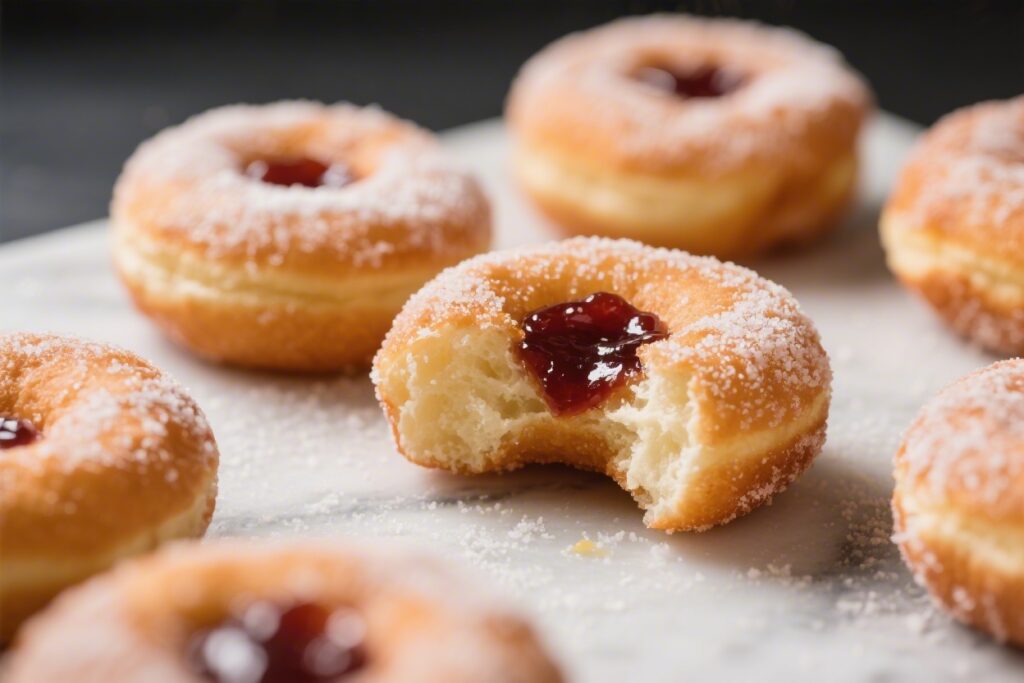
Warm, pillowy doughnuts dusted in sugar and hiding a pocket of jam are the kind of treat that make any day feel special. They’re nostalgic, simple, and surprisingly doable at home with a few basic ingredients. If you’ve never made yeasted doughnuts before, don’t worry—this recipe walks you through each step with clear, practical tips.
The result is a golden, tender doughnut that gives way to a burst of fruity sweetness. Make a batch for brunch, a bake sale, or just because.
What Makes This Special
These jam-filled sugar doughnuts combine the best parts of a bakery favorite with the comfort of homemade. The dough is light and airy, with a gentle sweetness that lets the jam shine.
Rolling them in sugar while still warm adds a delicate crunch that melts on your tongue. You can customize the filling—strawberry, raspberry, apricot, or even lemon curd—to suit your mood or what’s in your pantry.
Unlike cake doughnuts, these are yeast-raised, so they’re fluffy and not overly dense. And yes, they’re fried, but done right, they won’t feel greasy.
The key is the right oil temperature and a little patience with the rise. Once you’ve done it once, you’ll feel confident doing it again.
Recipe Card

Jam-Filled Sugar Doughnuts
Ingredients
- 3 1/4 cups (400 g) all-purpose flour, plus extra for dusting
- 1/3 cup (65 g) granulated sugar, plus more for coating
- 2 1/4 tsp (1 packet) instant or active dry yeast
- 1/2 tsp fine sea salt
- 3/4 cup (180 ml) warm milk (about 105–110°F / 40–43°C)
- 2 large eggs, at room temperature
- 1/4 cup (60 g) unsalted butter, softened
- 1 tsp vanilla extract
- Vegetable oil for frying (about 1.5–2 quarts / 1.5–2 liters)
- 1 to 1 1/2 cups jam of your choice (seedless raspberry, strawberry, apricot, or mixed berry)
- Optional: a pinch of ground cinnamon for the sugar coating
Instructions
- Bloom the yeast (if using active dry): Stir the yeast and a teaspoon of sugar into the warm milk. Let it sit 5–10 minutes until foamy. If using instant yeast, skip the bloom and add it directly to the flour.
- Make the dough: In a large bowl, whisk flour, sugar, and salt. Add the milk-yeast mixture (or milk if using instant yeast), eggs, and vanilla. Mix until a shaggy dough forms. Knead by hand or with a mixer on medium-low for 2–3 minutes.
- Add the butter: Knead in the softened butter a tablespoon at a time until the dough is smooth, elastic, and slightly tacky, about 6–8 more minutes. It should pull away from the bowl but still feel soft.
- First rise: Shape into a ball and place in a lightly oiled bowl. Cover and let rise in a warm spot until doubled, about 1–1.5 hours, depending on your kitchen temperature.
- Shape the doughnuts: Turn the dough onto a lightly floured surface. Gently pat to about 1/2 inch (1.25 cm) thick. Use a 2.5–3 inch (6–7.5 cm) round cutter to cut circles. Gather scraps and repeat. Place rounds on parchment-lined baking sheets, leaving space between them.
- Second rise: Cover loosely with a clean towel and let rise until puffy, about 30–45 minutes. They should look light and slightly domed when ready.
- Heat the oil: In a heavy pot, heat 2–3 inches (5–7.5 cm) of oil to 350–360°F (175–182°C). Keep a thermometer clipped on to maintain temperature. Prepare a tray with paper towels and a shallow bowl of sugar (with cinnamon if using).
- Fry in batches: Carefully lift dough rounds and lower into the oil, a few at a time. Fry about 1–2 minutes per side until deep golden, turning once. Avoid crowding the pot.
- Drain and coat: Transfer to paper towels for 10–15 seconds, then roll warm doughnuts in sugar to coat all sides. Work while they’re still warm so the sugar sticks well.
- Fill with jam: Fit a piping bag with a long, narrow tip (Bismarck tip) and fill with jam. Pierce the side of each doughnut and gently pipe in about 1–2 tablespoons of jam until it feels plump. No piping bag? Use a small knife to make a slit and spoon or squeeze jam in with a zip-top bag.
- Serve: Enjoy slightly warm or at room temperature. They’re best the day they’re made.
Keeping It Fresh
These doughnuts are at their peak within hours of frying. To store, keep them in an airtight container at room temperature for up to 24 hours.
The sugar coating may soften, but the doughnuts will still taste great. If you plan ahead, leave some unfilled and fill just before serving to keep the interior from getting soggy.
For longer storage, freeze unfilled doughnuts after cooling, up to 2 months. Thaw at room temperature, then refresh in a 300°F (150°C) oven for 5–7 minutes and roll in fresh sugar before filling.
Filled doughnuts don’t freeze as well, but you can refrigerate them for a day—just expect a softer texture.
Benefits of This Recipe
- Simple ingredients: Pantry staples, no specialty flours or equipment required.
- Customizable filling: Use your favorite jam, curd, or even chocolate-hazelnut spread.
- Light, airy texture: A proper rise and gentle knead create that bakery-style fluff.
- Make-ahead friendly: Dough can be chilled overnight for a slow rise and easier morning frying.
- Great for sharing: A dozen warm doughnuts has a way of making you very popular.
What Not to Do
- Don’t fry too cool or too hot: Below 340°F (171°C) leads to greasy doughnuts; above 370°F (188°C) browns the outside before the inside cooks.
- Don’t skip the second rise: It’s crucial for a soft, airy interior.
- Don’t add all the flour at once if the dough is dry: Humidity varies. Hold back a little and add as needed to achieve a soft, slightly tacky dough.
- Don’t rush the butter incorporation: Add it gradually or the dough can split and turn greasy.
- Don’t overfill with jam: Too much can burst the doughnut or make it soggy. Aim for a gentle plumpness.
Alternatives
- Fillings: Lemon curd, pastry cream, vanilla custard, blackberry jam, or dulce de leche.
- Coatings: Swap granulated sugar for superfine sugar, cinnamon sugar, or powdered sugar (dust after cooling).
- Baked option: Not the same as fried, but you can bake shaped rounds at 350°F (175°C) for 12–15 minutes, brush with melted butter, and roll in sugar.
Texture will be more like a soft roll.
- Flavor the dough: Add citrus zest, a pinch of cardamom, or swap vanilla for almond extract.
- Dairy-free: Use plant milk and dairy-free butter. Texture remains soft if you keep the dough slightly tacky.
FAQ
Can I make the dough the night before?
Yes. After kneading, cover the bowl and refrigerate overnight for a slow, cold rise.
The next day, let the dough warm up for 20–30 minutes, shape, proof again, and fry as directed. The flavor is often better with the overnight rest.
What oil is best for frying?
Use a neutral, high-heat oil like canola, peanut, or sunflower. They have clean flavors and stable smoke points, which help prevent off tastes and keep the kitchen less smoky.
How do I know when the dough is kneaded enough?
The dough should feel smooth and elastic, and it will stretch without tearing easily.
If you gently pull a piece, it should form a thin, slightly translucent “windowpane.” Slight tackiness is fine; it shouldn’t be sticky.
My doughnuts look cooked outside but are raw inside. Why?
The oil was too hot, or the doughnuts were too thick. Keep the oil between 350–360°F (175–182°C) and maintain consistent thickness when cutting.
A thermometer is your best friend here.
Do I have to use a special tip to fill them?
No. A narrow piping tip makes it neater, but you can also use a small knife to make a pocket and spoon in jam, or use a zip-top bag with a small corner snipped off. Work gently to avoid tearing.
Can I use whole wheat flour?
You can substitute up to 25–30% of the flour with white whole wheat for a bit of nuttiness.
Expect a slightly denser texture. Keep the dough soft by adding a teaspoon or two more milk if needed.
How many doughnuts does this make?
Depending on your cutter size, you’ll get about 12–16 doughnuts. Smaller rounds yield more, but keep an eye on frying time—they’ll cook a bit faster.
What jam works best?
Seedless raspberry or strawberry are classics because they pipe smoothly and have a bright, sweet-tart flavor.
Apricot is lovely too. If your jam is very thick, stir it to loosen or warm it slightly so it pipes easily.
Why roll in sugar before filling?
It’s less messy, and the warm surface helps the sugar adhere evenly. After filling, you can always sprinkle a bit more if needed.
Can I make mini doughnuts?
Yes.
Cut smaller rounds and reduce frying time to about 45–60 seconds per side. Fill with less jam—just a teaspoon or so—so they don’t split.
Final Thoughts
Jam-filled sugar doughnuts are the kind of project that feels impressive but doesn’t require fancy skills. With a soft dough, steady oil temperature, and a favorite jam, you’ll turn out a tray of golden treats that everyone will remember.
Keep the process relaxed, trust the rises, and enjoy the payoff of warm doughnuts made from scratch. Once you taste them fresh, it’s hard to go back to store-bought.