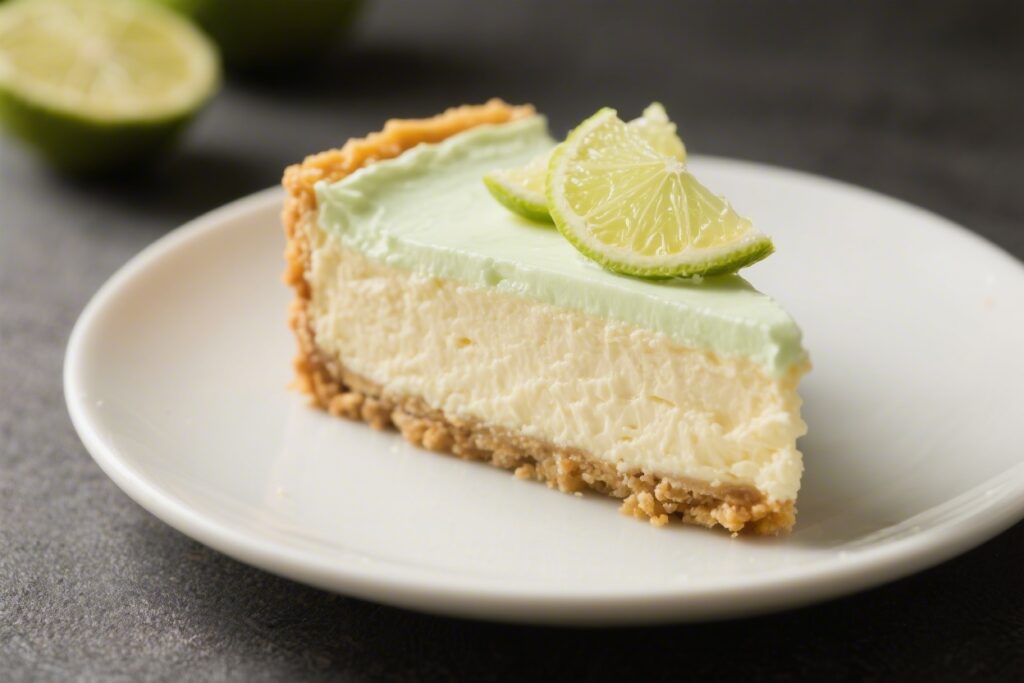
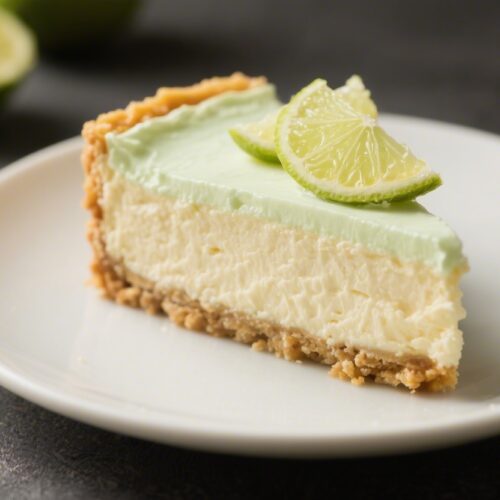
Key lime cheesecake brings sunshine to the dessert table. It’s creamy, smooth, and balanced with a bright citrus kick that keeps every bite from feeling heavy. The texture is silky, the crust is buttery, and the flavor is clean and refreshing.
If you love classic cheesecake but want something lighter and zippier, this is it. It’s special enough for holidays and simple enough for a weekend bake.
What Makes This Recipe So Good
This cheesecake hits that ideal sweet-tart balance that keeps you coming back for another forkful. The graham cracker crust adds a crisp, toasty base that holds up beautifully to the creamy filling.
Using real key lime juice and zest gives it a vibrant, natural flavor no bottled mix can match. There’s no water bath needed if you follow the timing and cooling tips, so it’s friendly for newer bakers. And it slices cleanly, chills well, and tastes even better the next day.
Recipe Card
Key Lime Cheesecake
Ingredients
- Cream cheese (full-fat, brick style, softened)
- Granulated sugar
- Sour cream (full-fat)
- Eggs (room temperature)
- Key lime juice (fresh preferred; bottled key lime juice works)
- Lime zest (from key limes or regular limes if needed)
- Vanilla extract
- Salt
- Graham crackers (or digestive biscuits)
- Unsalted butter (melted)
- Brown sugar (for the crust; optional but adds depth)
- Whipped cream (for topping; optional)
Instructions
- Prep the pan and oven. Heat the oven to 325°F (163°C). Line the bottom of a 9-inch springform pan with parchment and lightly grease the sides.
- Make the crust. Pulse graham crackers into fine crumbs. Stir in brown sugar and a pinch of salt, then mix in melted butter until the mixture feels like damp sand.
- Press and pre-bake. Press crumbs firmly into the bottom and slightly up the sides of the pan. Bake for 8–10 minutes, just until set and fragrant. Cool while you make the filling.
- Beat the cream cheese. In a large bowl, beat softened cream cheese on medium speed until completely smooth, 1–2 minutes. Scrape the bowl well to avoid lumps.
- Add sugar and sour cream. Beat in granulated sugar until glossy, then mix in sour cream, vanilla, lime zest, and a small pinch of salt. Keep the speed on low to medium to avoid too much air.
- Mix in eggs gently. Add eggs one at a time, mixing on low just until each disappears. Overbeating introduces air, which can cause cracks.
- Stir in key lime juice. Mix on low until the batter is smooth. It will be silky and pourable but not thin.
- Fill the crust. Pour the filling over the cooled crust. Tap the pan on the counter a few times to release bubbles.
- Bake without a water bath. Bake at 325°F for 45–55 minutes. The edges should be set, and the center should wobble like gentle Jell-O when you nudge the pan.
- Cool slowly. Turn off the oven, crack the door, and let the cheesecake rest inside for 30 minutes. Then move it to a rack to cool to room temperature.
- Chill to set. Cover and refrigerate at least 6 hours, preferably overnight. This is when the texture becomes ultra-smooth.
- Finish and serve. Run a thin knife around the edge, release the springform, and transfer to a platter. Top with softly whipped cream and a sprinkle of zest, then slice with a hot, dry knife.
Keeping It Fresh
Cheesecake holds well when stored correctly. Keep it covered in the fridge for up to 5 days; a cake carrier or tight wrap prevents drying and fridge odors. For longer storage, freeze slices on a sheet pan until firm, then wrap tightly and store for up to 2 months.
Thaw overnight in the fridge and add whipped cream right before serving. Avoid thawing at room temperature, which can cause condensation and a gummy top.
Why This is Good for You
This is still dessert, but there are a few bright spots. Key limes bring vitamin C and a natural citrus aroma, so the flavor shines without excessive sugar.
The filling gets its creamy body from dairy fat and protein, which helps with satiety, so a small slice goes a long way. Compared to heavily frosted cakes, this cheesecake delivers big flavor without intense sweetness. And when you make it at home, you control the ingredients and portion sizes.
Pitfalls to Watch Out For
- Cold ingredients = lumpy batter. Make sure cream cheese, sour cream, and eggs are at room temp before mixing.
- Overmixing leads to cracks. Keep your mixer speed on the lower side and scrape the bowl often.
- Overbaking dries it out. Pull it when the center still has a soft wobble.
It firms up as it cools.
- Rushing the cool-down. Sudden temperature changes can cause dramatic cracking. Slow cooling is key.
- Loose crust. Pack the crust firmly and pre-bake so it doesn’t crumble under the filling.
- Too much juice. Stick to the measured amount; extra liquid can make the cheesecake weep or set softly.
Recipe Variations
- Coconut Key Lime Cheesecake: Swap 1/3 of the sour cream for coconut cream and add shredded toasted coconut to the crust.
- No-Bake Version: Use a chilled, buttered crust and a filling made with whipped cream folded into a cream cheese–key lime mixture set with a little gelatin.
- Gluten-Free: Use gluten-free graham crackers or almond flour crust (almond flour, butter, a touch of sugar, pinch of salt).
- Mini Cheesecakes: Line a muffin tin with papers, press in crust, and bake for 5 minutes. Fill and bake 15–18 minutes.
Chill as usual.
- Meringue Topping: Replace whipped cream with a torched Swiss meringue for a key lime pie vibe.
- Greek Yogurt Lighten-Up: Replace half the sour cream with thick Greek yogurt for a tangier, slightly lighter bite.
FAQ
Can I use regular limes instead of key limes?
Yes. Regular Persian limes will work if key limes aren’t available. The flavor will be a little less floral and slightly less sharp, but zesting the limes generously helps boost the citrus punch.
Do I need a water bath?
No, not for this method.
Gentle baking at 325°F, a proper wobble, and slow cooling prevent most cracks. If you prefer extra insurance, you can place a pan of hot water on the lower rack for added moisture.
How do I know when it’s done?
Look for set edges and a 2–3 inch circle in the center that still jiggles softly. If the top is puffing or browning deeply, it’s likely overbaked.
Trust the wobble more than the clock.
Why did my cheesecake crack?
Common reasons include overmixing, overbaking, or rapid temperature changes. Even if it cracks, it will still taste great—cover with whipped cream or a lime zest garnish, and no one will mind.
Can I make it ahead?
Absolutely. Cheesecake is better the next day.
Bake, cool, and chill overnight, then top with whipped cream just before serving. It’s a perfect make-ahead dessert for gatherings.
What’s the best way to slice cleanly?
Use a long, sharp knife heated under hot water and wiped dry between each cut. Clean slices depend on a firm chill and a hot, clean blade.
Can I reduce the sugar?
You can trim the sugar in the filling by 2–3 tablespoons without texture issues.
Much more than that can throw off the balance and make the tang feel harsh.
Is bottled key lime juice okay?
Yes, as long as it’s 100% key lime juice with no added sweeteners. Fresh zest in the batter will brighten the flavor and mimic the freshness of squeezed juice.
How do I prevent a soggy crust?
Pre-bake the crust, pack it tight, and cool it before adding the filling. If your kitchen is humid, you can brush a thin layer of beaten egg white over the hot crust and return it to the oven for 1 minute to seal it.
Can I use a different crust?
Sure.
Vanilla wafers, gingersnaps, or digestive biscuits all work. Gingersnaps add a warm spice note that pairs nicely with lime.
Wrapping Up
Key lime cheesecake is crisp, creamy, and bright—the kind of dessert that makes people pause and smile. With a few simple techniques, you’ll get a smooth texture, clean slices, and that signature citrus pop every time.
Make it a day ahead, top it with clouds of whipped cream, and enjoy a slice of sunshine whenever you need it.