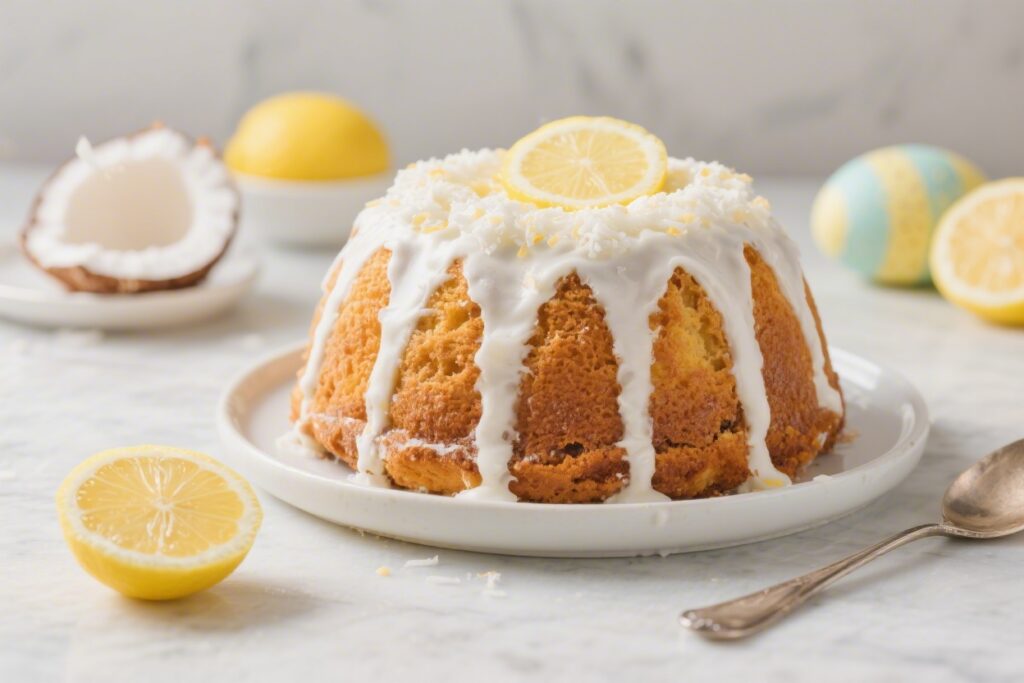
This Lemon Coconut Easter Cake tastes like sunshine on a plate. It’s soft, fluffy, and bursting with fresh lemon flavor, all wrapped in silky cream cheese frosting and a shower of shredded coconut. It looks festive without being fussy, and it’s the kind of cake people go back to for a second slice.
Whether you’re hosting a big brunch or a relaxed family meal, this one delivers. Simple ingredients, easy steps, and a beautiful finish—what more do you need?
What Makes This Recipe So Good
- Bright, real lemon flavor: Fresh lemon zest and juice give the cake a lively citrus kick without tasting artificial.
- Moist and tender crumb: Buttermilk and a touch of oil keep the cake soft for days.
- Not-too-sweet frosting: Cream cheese frosting balances the sweetness of the coconut and the zing of the lemon.
- Easter-ready look: A snowdrift of coconut on top makes an instant spring centerpiece with minimal effort.
- Beginner-friendly: Straightforward steps, common pantry ingredients, and flexible bake options (two layers or a 9×13 pan).
Shopping List
- All-purpose flour (2 1/2 cups)
- Granulated sugar (1 1/2 cups)
- Baking powder (2 1/2 teaspoons)
- Fine sea salt (1/2 teaspoon)
- Unsalted butter (1/2 cup, softened)
- Neutral oil like canola or light olive oil (1/3 cup)
- Eggs (4 large, room temperature)
- Buttermilk (1 cup, room temperature)
- Fresh lemons (you’ll need 2–3 for zest and 1/3 cup juice)
- Pure vanilla extract (2 teaspoons)
- Unsweetened shredded coconut or sweetened flake coconut (2–3 cups, for inside and decorating)
- Cream cheese (16 ounces, softened)
- Unsalted butter for frosting (1/2 cup, softened)
- Powdered sugar (3–4 cups, sifted)
- Lemon zest and juice for frosting (1 lemon)
- Optional add-ins: coconut extract, toasted coconut, lemon curd for filling, pastel chocolate eggs for topping
Step-by-Step Instructions
- Prep your pans and oven. Heat the oven to 350°F (175°C). Grease and line two 8-inch cake pans with parchment, then lightly flour.
For a sheet cake, use a greased 9×13 pan.
- Mix dry ingredients. In a large bowl, whisk flour, baking powder, and salt until evenly combined. Set aside.
- Cream the fats and sugar. In a stand mixer or with a hand mixer, beat softened butter and granulated sugar on medium-high until pale and fluffy, about 3 minutes. Stream in the oil and beat another minute.
- Add eggs. Beat in the eggs one at a time, mixing well after each.
Scrape the bowl. Stir in vanilla, lemon zest (about 2 tablespoons), and lemon juice (about 1/3 cup).
- Alternate dry and wet. On low speed, add the dry mixture in three additions, alternating with the buttermilk in two additions. Mix just until combined.
The batter should be smooth and slightly thick.
- Fold in coconut. Gently fold 3/4 to 1 cup of shredded coconut into the batter for texture and extra flavor.
- Bake. Divide the batter between the pans and smooth the tops. Bake 24–28 minutes for 8-inch layers, or 30–35 minutes for a 9×13, until a toothpick comes out clean and the top springs back.
- Cool completely. Let cakes cool in pans for 10 minutes, then turn out onto racks and remove parchment. Cool fully before frosting.
- Make the frosting. Beat softened cream cheese and butter until smooth and creamy, 2–3 minutes.
Add 3 cups powdered sugar, 1 teaspoon vanilla, 1 teaspoon lemon zest, and 1–2 tablespoons lemon juice. Beat until fluffy. Add more powdered sugar to reach a spreadable, not runny, consistency.
- Optional filling boost. For more lemon pop, spread a thin layer of lemon curd between the layers before frosting, keeping a small frosting “dam” around the edge to prevent oozing.
- Assemble. Place the first cake layer on a plate.
Spread a generous layer of frosting. Top with the second layer. Frost the sides and top until smooth.
- Coat with coconut. Press shredded coconut onto the sides and sprinkle generously over the top.
For a toasty note, use lightly toasted coconut flakes on top.
- Decorate. Add lemon slices, curls of zest, or a small nest of coconut in the center with a few pastel chocolate eggs for an Easter touch.
- Chill briefly, then serve. Refrigerate 20–30 minutes to set the frosting for cleaner slices. Serve at cool room temperature.
Storage Instructions
- Short term: Keep covered in the fridge for up to 4 days. Bring to room temperature for 30–45 minutes before serving for the best texture.
- Freezing layers: Wrap unfrosted cake layers tightly in plastic and freeze up to 2 months.
Thaw in the fridge overnight, then frost.
- Freezing slices: Freeze individual frosted slices on a sheet pan until firm, then wrap well. Thaw in the fridge, then soften at room temp.
- Avoid drying out: Keep the cake covered to protect the crumb and frosting from fridge dryness.
Why This is Good for You
- Citrus lift: Lemon adds brightness and a small boost of vitamin C while keeping flavors fresh and light.
- Mindful sweetness: The tangy cream cheese frosting lets you use less sugar than many buttercreams without losing satisfaction.
- Choose your coconut: Using unsweetened coconut cuts sugar, while toasted coconut brings flavor without extra frosting.
- Portion-friendly: The cake is rich, so a modest slice goes a long way for a celebratory treat.
What Not to Do
- Don’t skip the zest. The zest carries essential oils that deliver most of the lemon aroma and flavor.
- Don’t overmix the batter. Mix just until combined to avoid a dense, tough crumb.
- Don’t frost a warm cake. Warm layers will melt the frosting and slide apart.
- Don’t use cold cream cheese. It won’t blend smoothly and can leave lumps in your frosting.
- Don’t pack the flour. Spoon and level it to prevent a dry cake.
Variations You Can Try
- Lemon-Coconut Sheet Cake: Bake in a 9×13, frost the top only, and finish with coconut for a casual, easy-to-serve dessert.
- Lemon Curd Layer: Add a thin layer of lemon curd between the cakes for extra tang. Keep a frosting barrier to hold it in.
- Toasted Coconut Crunch: Toast half the coconut and mix it with untoasted flakes for flavor and texture contrast.
- Almond Twist: Swap 1 teaspoon vanilla for 1/2 teaspoon almond extract and sprinkle sliced almonds on top.
- Gluten-Free: Use a 1:1 gluten-free flour blend with xanthan gum.
Let the batter rest 10 minutes before baking for better hydration.
- Dairy-Free: Use dairy-free butter, coconut milk with 1 teaspoon vinegar instead of buttermilk, and a dairy-free cream cheese.
- Coconut-Lime: Replace lemon with lime zest and juice for a tropical spin.
FAQ
Can I make this cake a day ahead?
Yes. Bake and cool the layers, then wrap and refrigerate overnight. Frost the next day, or fully assemble and chill.
Let it sit at room temperature for 30–45 minutes before serving.
What if I don’t have buttermilk?
Stir 1 tablespoon lemon juice into 1 cup milk and let it sit for 5 minutes. This quick swap gives you the acidity you need for a tender crumb.
How do I keep the coconut on the sides?
Frost the cake smoothly, then hold it over a large baking sheet. Press small handfuls of coconut into the sides, rotating as you go.
The tray catches the extra so you can reuse it.
Can I reduce the sugar?
You can reduce granulated sugar in the cake by about 1/4 cup without a major texture change. For the frosting, start with 2 1/2 cups powdered sugar and add more only if needed for structure.
How do I know the cake is done?
Look for light golden edges, a springy top, and a toothpick that comes out clean or with a few moist crumbs. If the center jiggles, give it a few more minutes.
Is coconut extract necessary?
No.
It’s optional. The shredded coconut and cream cheese frosting bring plenty of flavor, but a 1/4–1/2 teaspoon of coconut extract boosts the coconut note if you like it stronger.
In Conclusion
This Lemon Coconut Easter Cake brings bright citrus, tender crumb, and creamy frosting together in one cheerful dessert. It’s elegant enough for a holiday table, yet simple enough to whip up with pantry staples.
Dress it up with a coconut “nest” or keep it classic and clean—either way, it tastes like spring. Make it once, and it might become your new Easter tradition.