
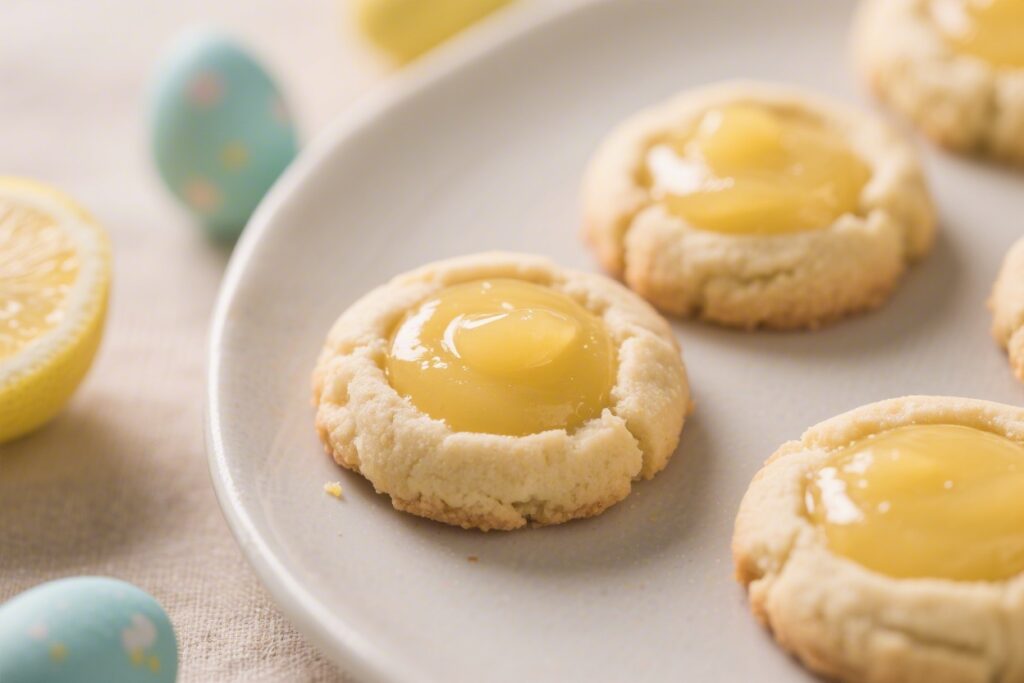
These thumbprint cookies taste like spring in a bite—soft, buttery centers filled with glossy lemon curd and finished with a light dusting of sugar. They’re easy enough for a weeknight treat and pretty enough for your Easter table. The lemon curd adds a sunny pop of flavor that balances the richness of the cookie.
Make them with store-bought curd or go homemade if you’re feeling fancy. Either way, they’re bright, cheerful, and guaranteed to disappear quickly.
Why This Recipe Works
- Buttery, tender base: The cookie dough uses a classic creamed-butter method for a soft, delicate crumb that holds its shape.
- Perfect tart-sweet balance: Lemon curd brings zingy citrus that cuts through the buttery cookie, making each bite feel light.
- No spreading: A chill step keeps the cookies from flattening, so the thumbprint wells stay neat and ready for filling.
- Easter-ready look: A sprinkle of pastel sanding sugar or a drizzle of white chocolate makes them holiday festive without extra fuss.
- Make-ahead friendly: You can bake the cookies and fill them later, or freeze unbaked dough balls for fresh cookies on demand.
Recipe Card

Lemon Curd Stuffed Easter Thumbprint Cookies
Ingredients
For the cookies:
- 1 cup (2 sticks) unsalted butter, softened
- 2/3 cup granulated sugar
- 1 large egg
- 1 teaspoon vanilla extract
- 1/2 teaspoon almond extract (optional but lovely)
- 2 1/4 cups all-purpose flour
- 1/2 teaspoon baking powder
- 1/2 teaspoon fine salt
- 1–2 tablespoons milk, as needed (for pliable dough)
For the filling:
- 3/4 to 1 cup lemon curd (store-bought or homemade)
For finishing (optional):
- Pastel sanding sugar or sprinkles
- Powdered sugar for dusting
- 2 ounces white chocolate, melted, for a light drizzle
- Finely grated lemon zest
Instructions
- Cream the butter and sugar: In a large bowl, beat the softened butter and granulated sugar with a hand mixer or stand mixer on medium speed until light and fluffy, about 2–3 minutes. Scrape down the bowl.
- Add egg and extracts: Mix in the egg, vanilla, and almond extract (if using) until fully combined. The mixture should look smooth and creamy.
- Combine dry ingredients: In a separate bowl, whisk flour, baking powder, and salt. Add the dry mix to the wet in two additions, mixing on low just until the dough starts to come together.
- Adjust consistency: If the dough looks crumbly, add milk 1 teaspoon at a time until it holds together but isn’t sticky. You want a soft, pliable dough that forms a ball easily.
- Chill briefly: Cover and chill the dough for 20–30 minutes. This helps prevent spreading and makes shaping easier.
- Preheat and prep: Heat the oven to 350°F (175°C). Line two baking sheets with parchment paper.
- Shape the cookies: Scoop 1 tablespoon portions and roll into smooth balls. If using sanding sugar, roll the dough balls lightly in it now. Space them about 2 inches apart on the sheets.
- Make the wells: Use your thumb, the back of a 1/2 teaspoon measure, or the end of a thick wooden spoon to press a shallow well into the center of each ball. Don’t press too hard; you want a neat indentation without cracking.
- Bake the shells: Bake for 8–10 minutes, until the edges are set but still pale. Remove the tray and gently press the wells again, if they’ve puffed, while the cookies are warm.
- Fill and finish baking: Spoon about 1 teaspoon lemon curd into each well. Return to the oven and bake another 3–4 minutes, until the curd looks glossy and the cookie edges are just turning golden.
- Cool completely: Let the cookies rest on the sheet for 5 minutes, then transfer to a wire rack to cool. For a neat look, avoid moving them while the curd is hot.
- Optional garnish: Once cool, dust with powdered sugar, drizzle with melted white chocolate, or add a whisper of lemon zest for extra aroma.
Keeping It Fresh
- Room temperature: Store in an airtight container for up to 2 days. Place parchment between layers to protect the curd tops.
- Refrigerator: Keeps best for 5–6 days.
The texture stays tender, and the lemon curd remains bright.
- Freezer: Freeze baked, filled cookies on a sheet until firm, then transfer to a container for up to 2 months. Thaw at room temperature. Or freeze unbaked dough balls for fresh cookies anytime—just thaw, indent, fill, and bake.
- Avoid moisture: Keep away from humidity to prevent the sugar from dissolving and the cookies from getting tacky.
Why This is Good for You
- Built-in portion control: They’re small and satisfying, so a single cookie delivers flavor without going overboard.
- Citrus lift: Lemon curd brings brightness and a hint of vitamin C from real lemon juice and zest.
- Balanced treat: A little butter and sugar go a long way when paired with tangy citrus, keeping each bite lively rather than heavy.
- Customizable sweetness: You can choose a less-sweet curd or reduce garnish to tailor the sugar level.
What Not to Do
- Don’t skip chilling the dough: Warm dough spreads and loses the classic thumbprint shape.
- Don’t overbake: If they brown too much, the cookies turn dry and the curd can curdle.
Pull them when edges are just set.
- Don’t overfill: Too much curd will bubble over. Aim for about 1 teaspoon per cookie.
- Don’t press too deep: If the well touches the bottom, it can crack or leak.
- Don’t stack warm cookies: Let them cool completely or the curd tops will smear and stick.
Alternatives
- Flavor twists: Swap lemon curd for raspberry, passion fruit, or lime curd. For a floral note, add a drop of orange blossom water to the dough.
- Nutty variation: Roll the dough balls in finely chopped pistachios or almonds before baking for a crunchy edge.
- Glaze instead of drizzle: Whisk powdered sugar with a little lemon juice and lightly glaze the cooled cookies.
- Gluten-free: Use a 1:1 gluten-free baking flour with xanthan gum.
Chill a bit longer to help the cookies hold shape.
- Dairy-free: Use a good plant-based butter with at least 75–80% fat. Texture stays close to classic.
- Easter decor: Tint a small portion of white chocolate pastel pink, yellow, or mint, and drizzle in thin stripes for a spring look.
FAQ
Can I make the dough ahead of time?
Yes. Wrap the dough well and refrigerate for up to 48 hours.
Let it sit at room temperature for 10–15 minutes before shaping if it’s too firm to scoop.
Is it better to bake with the curd or fill after baking?
Either works. Baking with curd sets it slightly and gives a glossy finish. If you prefer a softer, silkier center, bake the cookies plain, then spoon in curd once they’re cool.
How do I prevent cracks when making the thumbprint?
Roll very smooth dough balls, press gently, and rotate the ball slightly as you press.
If small cracks appear, nudge them back together with your fingers before baking.
Can I use lemon jam instead of curd?
You can, but the flavor and texture will differ. Curd is richer and silkier, while jam is sweeter and a bit sticky. If using jam, warm it slightly and stir to loosen before filling.
What if I don’t have almond extract?
Skip it or replace with extra vanilla.
Almond adds a subtle bakery-style note, but the cookies are still delicious without it.
My cookies spread. What went wrong?
Likely warm dough or too much milk. Chill longer, measure flour accurately, and avoid over-creaming the butter to the point of being too airy.
Can I make mini or larger cookies?
Yes.
For minis, use 2 teaspoons of dough and bake 1–2 minutes less. For larger, use heaping tablespoons and add 1–2 minutes, watching the edges closely.
How do I make homemade lemon curd quickly?
Whisk 1/2 cup lemon juice, 2 teaspoons zest, 1/2 cup sugar, 3 egg yolks, and a pinch of salt over gentle heat until thick, then whisk in 6 tablespoons cold butter. Strain and cool before using.
Wrapping Up
Lemon Curd Stuffed Easter Thumbprint Cookies are bright, buttery, and simple to pull off—just the kind of treat that makes a spring gathering feel special.
With a soft cookie base and a tangy lemon center, they strike that perfect sweet-tart balance. Make them ahead, dress them up with a pastel drizzle, and watch them fly off the plate. They’re a small reminder that simple bakes can be the most memorable.