
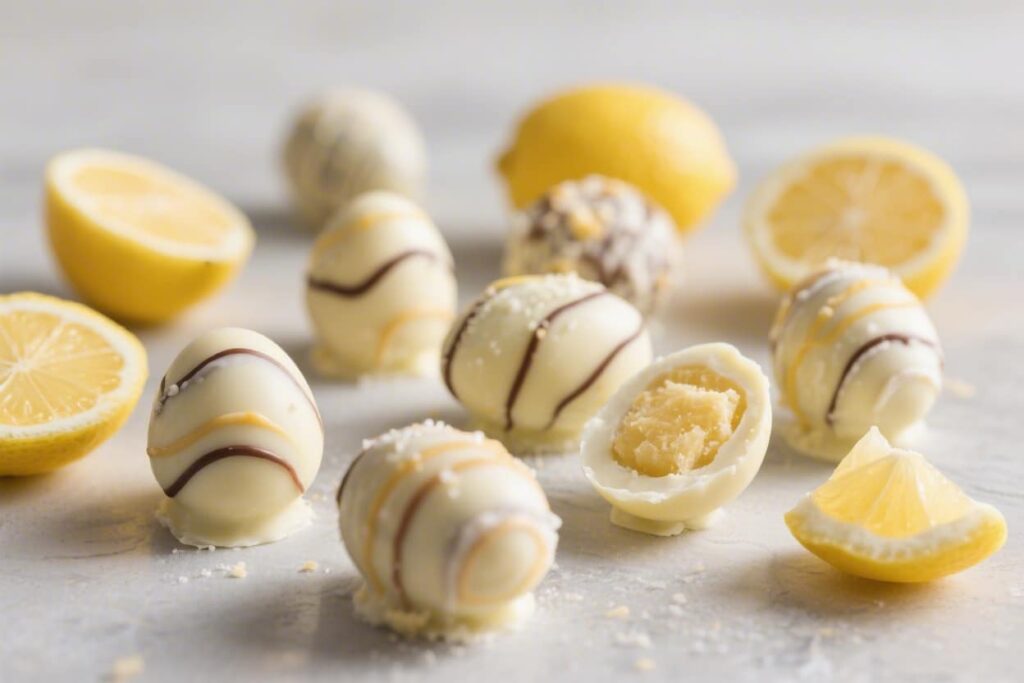
Zesty, creamy, and impossibly cute, these Lemon Easter Egg Truffles bring a burst of sunshine to your spring table. They’re the kind of sweets that look fancy but come together with simple ingredients and an easy process. Each bite is silky and bright, with a white chocolate shell that snaps gently before melting.
They make a thoughtful gift, a sweet bite after brunch, or a colorful addition to your dessert platter. If you love lemon desserts, this recipe will quickly earn a spot in your spring rotation.
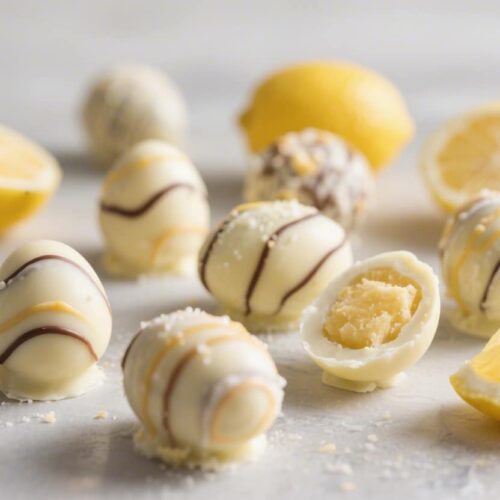
Lemon Easter Egg Truffles
Ingredients
- 8 oz 225 g white chocolate, finely chopped (for the filling)
- 1/2 cup 120 ml heavy cream
- 2 tbsp unsalted butter cut into small pieces
- 2 –3 tsp lemon zest from 1–2 lemons
- 2 –3 tbsp fresh lemon juice to taste
- 1/4 tsp vanilla extract optional, for roundness
- Pinch of fine sea salt
- 12 oz 340 g white chocolate or candy melts, for coating
- Gel food coloring pastels like yellow, pink, lavender, or mint
- Sprinkles or sanding sugar optional, for decoration
- Neutral oil or cocoa butter 1–2 tsp, optional, to thin coating
Instructions
- Make the lemon ganache base. Place the chopped white chocolate in a heatproof bowl. In a small saucepan, warm the cream and butter over medium heat until steaming and just starting to bubble at the edges. Pour over the white chocolate and let sit for 2 minutes.
- Stir until smooth. Gently mix from the center outward until the chocolate melts and the mixture is glossy. If a few lumps remain, briefly set the bowl over a pot of barely simmering water and stir until smooth.
- Add flavor. Stir in lemon zest, 2 tablespoons lemon juice, vanilla (if using), and a pinch of salt. Taste and add the extra tablespoon of lemon juice if you want a brighter punch. The mixture should be thick but pourable.
- Chill to set. Cover the bowl and refrigerate for 2–3 hours, or until firm enough to scoop. You want a texture like soft clay.
- Shape the eggs. Line a baking sheet with parchment. Scoop small portions (about 1 tablespoon each) and roll quickly into ovals with your palms to form egg shapes. If the mix is sticky, dust your hands lightly with powdered sugar or chill the mixture for another 15 minutes.
- Freeze briefly. Place the shaped eggs in the freezer for 15–20 minutes. This helps them hold together during dipping and creates a clean coating.
- Prepare the coating. Melt the coating chocolate or candy melts in short bursts in the microwave (50% power, stirring frequently) or over a double boiler. If it seems thick, stir in 1 teaspoon neutral oil to thin. Divide into bowls and tint with a drop or two of gel coloring for pretty pastel shades.
- Dip the truffles. Working in batches, use a fork to dip each chilled egg into the coating. Tap the fork on the bowl’s edge to shake off excess. Slide the truffle onto parchment using a toothpick or another fork.
- Decorate. While the coating is still wet, add sprinkles, a drizzle of contrasting color, or lines made by piping a bit of melted coating from a zip-top bag with a tiny snip.
- Set and serve. Let the coating firm up at room temperature for 15–20 minutes, or chill for 5–10 minutes. Serve slightly cool or at room temperature for the creamiest center.
What Makes This Special
These truffles balance sweet and tangy in the most satisfying way. The creamy lemon filling is smooth and rich, but the citrus keeps it light.
Shaping them like little Easter eggs adds charm without adding time, and you can decorate them as simply or as playfully as you like.
They’re also no-bake, which makes them a great make-ahead dessert for busy weekends. The recipe is flexible, too—swap coatings, play with decorations, and adjust the lemon flavor to your liking. They’re small, satisfying, and easy to share.
What You’ll Need
- 8 oz (225 g) white chocolate, finely chopped (for the filling)
- 1/2 cup (120 ml) heavy cream
- 2 tbsp unsalted butter, cut into small pieces
- 2–3 tsp lemon zest (from 1–2 lemons)
- 2–3 tbsp fresh lemon juice, to taste
- 1/4 tsp vanilla extract (optional, for roundness)
- Pinch of fine sea salt
- 12 oz (340 g) white chocolate or candy melts, for coating
- Gel food coloring (pastels like yellow, pink, lavender, or mint)
- Sprinkles or sanding sugar (optional, for decoration)
- Neutral oil or cocoa butter (1–2 tsp, optional, to thin coating)
Tools: Mixing bowls, heatproof bowl, small saucepan, spatula, microplane or grater, baking sheet, parchment paper, melon baller or teaspoon, and a fork for dipping.
How to Make It
- Make the lemon ganache base. Place the chopped white chocolate in a heatproof bowl. In a small saucepan, warm the cream and butter over medium heat until steaming and just starting to bubble at the edges. Pour over the white chocolate and let sit for 2 minutes.
- Stir until smooth. Gently mix from the center outward until the chocolate melts and the mixture is glossy. If a few lumps remain, briefly set the bowl over a pot of barely simmering water and stir until smooth.
- Add flavor. Stir in lemon zest, 2 tablespoons lemon juice, vanilla (if using), and a pinch of salt. Taste and add the extra tablespoon of lemon juice if you want a brighter punch. The mixture should be thick but pourable.
- Chill to set. Cover the bowl and refrigerate for 2–3 hours, or until firm enough to scoop. You want a texture like soft clay.
- Shape the eggs. Line a baking sheet with parchment. Scoop small portions (about 1 tablespoon each) and roll quickly into ovals with your palms to form egg shapes. If the mix is sticky, dust your hands lightly with powdered sugar or chill the mixture for another 15 minutes.
- Freeze briefly. Place the shaped eggs in the freezer for 15–20 minutes. This helps them hold together during dipping and creates a clean coating.
- Prepare the coating. Melt the coating chocolate or candy melts in short bursts in the microwave (50% power, stirring frequently) or over a double boiler. If it seems thick, stir in 1 teaspoon neutral oil to thin. Divide into bowls and tint with a drop or two of gel coloring for pretty pastel shades.
- Dip the truffles. Working in batches, use a fork to dip each chilled egg into the coating. Tap the fork on the bowl’s edge to shake off excess. Slide the truffle onto parchment using a toothpick or another fork.
- Decorate. While the coating is still wet, add sprinkles, a drizzle of contrasting color, or lines made by piping a bit of melted coating from a zip-top bag with a tiny snip.
- Set and serve. Let the coating firm up at room temperature for 15–20 minutes, or chill for 5–10 minutes. Serve slightly cool or at room temperature for the creamiest center.
Storage Instructions
- Refrigerator: Store in an airtight container for up to 1 week. Place parchment between layers to prevent sticking.
- Freezer: Freeze for up to 2 months. Thaw in the fridge overnight, then let sit at room temperature for 10–15 minutes before serving.
- Room temperature: If your kitchen is cool, they can sit out for a few hours when serving. Avoid warm, sunny spots—white chocolate softens quickly.
Health Benefits
While these are a treat, there are a few bright spots. Lemon zest and juice add vitamin C and antioxidants, bringing freshness without heavy add-ins. Using strong lemon flavor means you can keep portions small yet satisfying.
White chocolate contains dairy, which provides a little calcium.
If you want to be more mindful, make the truffles smaller and enjoy one as a sweet finish. Pairing them with berries on a platter adds fiber and balance to the overall dessert spread.
Common Mistakes to Avoid
- Overheating the chocolate: White chocolate scorches easily. Melt low and slow, and stir often.
- Using too much lemon juice: Excess liquid can make the ganache grainy or too soft. Start with 2 tablespoons and add more carefully.
- Skipping the chill time: If the mixture isn’t firm, shaping gets messy and dipping becomes frustrating. Chill until it holds an oval shape.
- Working too warm: Warm hands or a warm kitchen can melt the centers. Keep batches cold and rotate in and out of the freezer.
- Thick coating: If the shell is too thick, it overpowers the lemon center. Thin with a little neutral oil and tap off excess.
Alternatives
- Dairy-free version: Use dairy-free white chocolate and full-fat coconut milk in place of cream. Add a touch of coconut oil if needed to smooth the ganache.
- Coating swaps: Try dark or milk chocolate for a sweet-tart contrast. A dusting of powdered sugar or coconut flakes also works if you want to skip dipping.
- Flavor twists: Add 1/4 teaspoon almond extract, or swap lemon for lime or orange. A bit of finely chopped candied ginger gives a warm kick.
- Color play: Keep the centers pale and decorate with colored drizzle only, or make a marbled effect by swirling two pastel coatings together.
- Texture add-ins: Fold in 2–3 tablespoons of very finely crushed shortbread or vanilla wafer crumbs for a subtle cookie-bite texture.
FAQ
Can I make these without a double boiler?
Yes. Melt the chocolate in the microwave at 50% power in short bursts, stirring often. Stop as soon as most pieces melt, then stir until smooth.
Why did my ganache split or look greasy?
Too much acid or heat can cause splitting.
Warm the mixture gently and whisk in a teaspoon of cold cream to bring it back together. Next time, add lemon juice gradually and avoid overheating.
How do I get perfectly smooth coatings?
Keep the centers cold, thin the coating slightly with neutral oil, and tap off excess while the truffle rests on the fork. A quick pass of a warmed spoon can also smooth any bumps after dipping.
Can I use bottled lemon juice?
Fresh lemon juice is best for flavor and brightness.
Bottled juice can taste flat. If you must use it, add extra zest to lift the flavor.
Do I need to temper the chocolate?
Tempering gives a glossy snap and is great for room-temperature storage, but it’s optional here. Candy melts are a simpler alternative.
If you plan to keep the truffles out for hours, tempering helps the shell stay firm.
How far in advance can I make these?
Make them up to a week ahead and refrigerate. If you’re freezing, decorate after thawing to prevent condensation from smudging colors.
What if I don’t have gel food coloring?
Use oil-based candy colors for the coating. Water-based liquid colors can seize chocolate, so avoid them.
If you only have liquid, color candy melts rather than real chocolate.
My coating cracked after chilling—why?
Rapid temperature changes cause cracks. Let dipped truffles set at room temperature first, then chill briefly only if needed.
Can I shape them without rolling by hand?
Yes. Press the chilled mixture into silicone egg molds, level the tops, and freeze briefly.
Pop them out and dip as usual.
Are these safe for kids with nut allergies?
The base recipe is nut-free, but always check chocolate labels for cross-contamination warnings. Decorate with nut-free sprinkles and store separately from nut-containing treats.
Wrapping Up
Lemon Easter Egg Truffles are bright, creamy, and festive without a lot of fuss. With a tangy center and a pastel shell, they feel special enough for a holiday but simple enough for any spring afternoon.
Make a batch ahead, decorate with a few cheerful drizzles, and share them with the people you love. They’re tiny, sunny bites that bring joy to the dessert table—no complicated steps required.