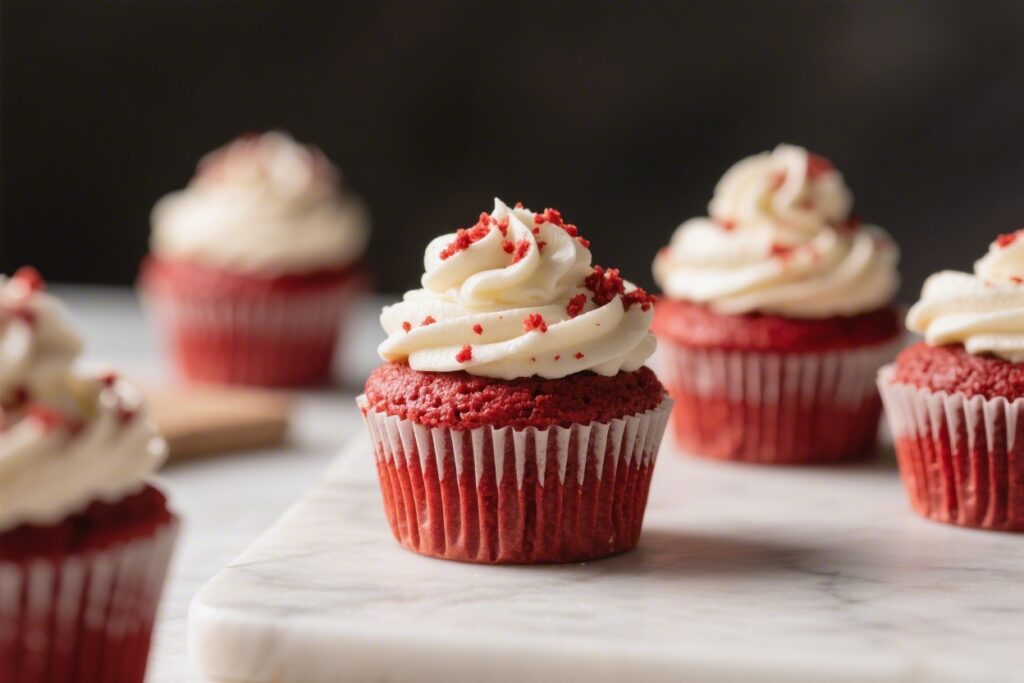
Red velvet cupcakes are the kind of treat that feels a little special without being fussy. They’re soft, lightly cocoa-flavored, and topped with a tangy cream cheese frosting that keeps every bite balanced. The color is eye-catching, but the real charm is the texture: tender, moist, and melt-in-your-mouth.
These cupcakes work for birthdays, holidays, or any day you want a small but memorable dessert. If you’ve never made them at home, you’ll be surprised at how simple and reliable this recipe is.
What Makes This Special
Red velvet isn’t just “chocolate with food coloring.” It’s a delicate blend of gentle cocoa, buttermilk, and a touch of vinegar that creates a plush crumb and a subtle tang. That balance makes the frosting shine without feeling too sweet.
The batter comes together quickly with pantry ingredients and bakes up evenly with domed tops—ideal for a generous swirl of frosting. Plus, the recipe scales easily, so you can make a dozen for a small gathering or double it for a crowd.
Ingredients
- All-purpose flour – 1 1/2 cups (180 g), spooned and leveled
- Granulated sugar – 1 cup (200 g)
- Unsweetened cocoa powder – 1 1/2 tablespoons (natural, not Dutch-process)
- Baking soda – 1 teaspoon
- Fine salt – 1/2 teaspoon
- Buttermilk – 3/4 cup (180 ml), at room temperature
- Neutral oil (canola or vegetable) – 1/2 cup (120 ml)
- Large eggs – 2, at room temperature
- Vanilla extract – 2 teaspoons
- White vinegar – 1 teaspoon
- Red gel food coloring – about 1 to 1 1/2 teaspoons (adjust to preference)
Cream Cheese Frosting
- Cream cheese – 8 oz (226 g), full-fat, softened
- Unsalted butter – 1/2 cup (113 g), softened
- Powdered sugar – 2 1/2 to 3 cups (300–360 g), sifted
- Vanilla extract – 1 teaspoon
- Pinch of salt – to taste
Instructions
- Prep the pan and oven. Line a 12-cup muffin tin with paper liners. Heat the oven to 350°F (175°C).
- Whisk dry ingredients. In a large bowl, whisk the flour, sugar, cocoa, baking soda, and salt until evenly combined.This keeps the crumb light.
- Mix wet ingredients. In a separate bowl, whisk the buttermilk, oil, eggs, vanilla, vinegar, and red food coloring. Start with 1 teaspoon of gel color; add more for a deeper hue.
- Combine gently. Pour the wet ingredients into the dry. Whisk or fold until just combined and no dry streaks remain. Do not overmix—a few small lumps are fine.
- Fill the liners. Divide the batter evenly among the liners, filling each about two-thirds full.A large cookie scoop helps keep portions consistent.
- Bake. Bake for 16–20 minutes, or until the tops spring back and a toothpick comes out with a few moist crumbs. Rotate the pan once if your oven has hot spots.
- Cool completely. Let cupcakes cool in the pan for 5 minutes, then transfer to a rack to cool fully before frosting. Warm cupcakes will melt frosting.
- Make the frosting. Beat the softened cream cheese and butter together until smooth and fluffy, about 2–3 minutes.Add vanilla and salt. Gradually mix in powdered sugar, starting on low, until creamy and pipeable.
- Frost and decorate. Pipe or spread frosting onto cooled cupcakes. For a simple garnish, crumble one cupcake top (or trim a little from one) and sprinkle the crumbs over the frosting.
How to Store
Because of the cream cheese frosting, store cupcakes covered in the refrigerator for up to 4 days.
Let them sit at room temperature for 20–30 minutes before serving to soften the crumb and frosting.
To make ahead, bake the cupcakes and freeze them unfrosted for up to 2 months. Thaw at room temperature in a sealed container, then frost. Leftover frosting keeps in the fridge for 5 days or the freezer for 1 month; bring it back to creamy by re-whipping.
Why This is Good for You
These cupcakes are, first and foremost, a treat.
Still, there are a few perks. The oil-based batter stays moist without needing a lot of saturated fat. The buttermilk and vinegar lighten the texture, which means you get a satisfying bite without a heavy feel.
Portion size also helps.
A cupcake naturally encourages moderation—built-in serving control without the temptation to cut a larger slice. And baking at home lets you choose quality ingredients and adjust sweetness to taste.
Pitfalls to Watch Out For
- Overmixing the batter makes cupcakes dense. Stop as soon as the flour disappears.
- Using Dutch-process cocoa can mute the tang and affect rise.Natural cocoa pairs best with the acidic ingredients here.
- Cold ingredients lead to a lumpy batter and uneven baking. Let buttermilk and eggs warm slightly.
- Overbaking dries them out. Check at 16 minutes; you’re aiming for moist crumbs, not a clean toothpick.
- Runny frosting happens if the cream cheese is too soft or warm.Chill it briefly or add more powdered sugar, a tablespoon at a time.
Alternatives
- No buttermilk? Make a quick swap: 3/4 cup milk plus 2 teaspoons lemon juice or white vinegar. Stir and rest for 5 minutes.
- Less food coloring: Use 1/2 teaspoon gel or skip entirely. Flavor stays the same, just a softer color.You can also try beet powder (1–2 teaspoons), though the hue will be more muted.
- Gluten-free: Use a 1:1 gluten-free baking flour with xanthan gum. Let the batter rest 10 minutes before baking for better hydration.
- Dairy-free: Substitute a thick, unsweetened non-dairy yogurt thinned with water for buttermilk, and use dairy-free cream cheese and butter for the frosting.
- Less sweet frosting: Reduce powdered sugar and add 1–2 tablespoons heavy cream to keep it smooth, or finish with a light dusting of powdered sugar instead of a full swirl.
- Mini cupcakes: Bake 10–12 minutes; this recipe makes about 30–36 minis.
FAQ
Can I use butter instead of oil?
You can, but the texture will be slightly different. Oil keeps cupcakes extra moist and tender for days.
If you prefer butter’s flavor, swap half the oil for melted, cooled butter to get a balance of taste and softness.
Why add vinegar to the batter?
Vinegar reacts with baking soda and the cocoa’s natural acidity, boosting lift and creating that signature velvety crumb. You won’t taste it once baked; it simply supports texture and color.
Do I need gel food coloring?
Gel gives strong color with less liquid, which protects the batter’s consistency. If you only have liquid food coloring, you’ll need more (about 1–2 tablespoons), and you may see a slightly looser batter.
Adjust with a teaspoon of extra flour if needed.
How do I get bakery-style frosting swirls?
Use a piping bag fitted with a large open star or round tip. Hold the bag upright, start at the outer edge, and spiral inward and up. For a clean finish, stop the pressure before lifting the tip away.
Why are my cupcakes sinking in the middle?
This often comes from underbaking, overmixing, or oven temperature issues.
Check your oven with an oven thermometer, mix only until combined, and bake until the centers spring back. Opening the oven door too early can also collapse the structure.
Can I make these as a cake instead?
Yes. Pour the batter into two 8-inch pans lined with parchment and bake 22–28 minutes.
Check for the same cues: springy centers and moist crumbs on a tester.
In Conclusion
Red velvet cupcakes are simple to make, yet they always feel like a celebration. With a tender crumb, a whisper of cocoa, and that cool, tangy frosting, they deliver balance in every bite. Follow the steps, keep an eye on the bake time, and you’ll have a dozen little showstoppers ready for sharing.
Once you see how reliable this recipe is, it’ll become your go-to for any occasion worth a sweet moment.