Shortbread is one of those bakes that never goes out of style. It’s simple, comforting, and somehow feels right for both a quiet afternoon and a festive spread. This traybake version makes the whole process easier and more reliable, with no fiddly shaping or rolling.
You press the dough into a pan, bake until golden at the edges, and slice while warm. The result is buttery, crumbly, and just the right amount of sweet.
What Makes This Recipe So Good
- Classic 3-2-1 ratio: The time-tested formula (flour-butter-sugar) gives a perfect crumb and a clean, buttery flavor.
- Traybake format: No cookie cutters or chilling. It’s quick to prep and great for feeding a crowd.
- Perfect texture: Crisp edges with a tender, melt-in-your-mouth center that doesn’t crumble into dust.
- Customizable: Add citrus zest, spices, or chocolate and it still bakes beautifully.
- Stays fresh: Shortbread keeps its texture for days, making it ideal for gifting or make-ahead treats.
Shopping List
- Unsalted butter (room temperature)
- Caster sugar (or granulated sugar; caster gives a finer crumb)
- Plain/all-purpose flour
- Cornflour (cornstarch) for a tender bite (optional but recommended)
- Fine sea salt
- Vanilla extract (optional, for flavor)
- Extra sugar for sprinkling on top (caster or granulated)
How to Make It
- Prep the pan: Heat the oven to 160°C/320°F (fan 140°C/285°F).
Line a 9×13-inch (23×33 cm) baking tin with parchment, leaving an overhang for easy lifting.
- Cream the butter and sugar: In a large bowl, beat 1 cup (225 g) unsalted butter with 1/2 cup (100 g) caster sugar until pale and fluffy, about 2–3 minutes. This builds lightness without making the dough sticky.
- Add flavor: Mix in 1 teaspoon vanilla extract and 1/2 teaspoon fine sea salt. If you’re using salted butter, reduce the added salt to a pinch.
- Combine dry ingredients: In a separate bowl, whisk 2 cups (240 g) plain flour with 1/4 cup (30 g) cornflour.
The cornflour helps create that classic short, crumbly texture.
- Make the dough: Add the dry ingredients to the butter mixture. Mix on low just until it comes together into a soft dough. Don’t overwork it or the shortbread will be tough.
- Press into the pan: Tip the dough into the lined tin.
Use your hands or the bottom of a measuring cup to press it into an even layer. Aim for consistent thickness so it bakes uniformly.
- Dock and chill briefly: Prick the dough all over with a fork. Chill the pan for 10–15 minutes to help prevent excessive puffing and spreading.
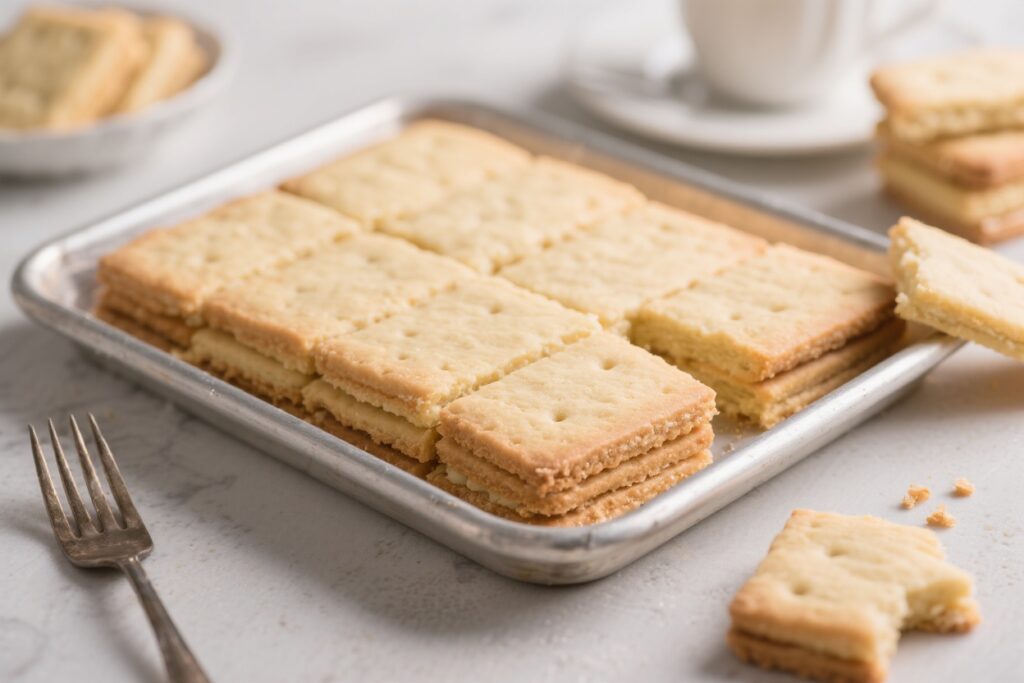
- Bake: Bake for 28–35 minutes, until the edges are lightly golden and the top looks set and matte.
It shouldn’t brown deeply.
- Score while warm: Remove from the oven and immediately slice into bars or squares using a sharp knife. Cutting while warm gives neat edges that won’t crumble.
- Finish: Sprinkle the top with 1–2 tablespoons of sugar for a delicate crunch. Let cool fully in the pan, then lift out and separate the pieces.
Storage Instructions
- Room temperature: Store in an airtight tin for up to 1 week.
Keep layers separated with parchment to protect the tops.
- Freezer: Freeze baked shortbread for up to 2 months. Wrap well and thaw at room temperature still wrapped to prevent condensation.
- Unbaked dough: Press into a lined pan, wrap, and refrigerate up to 2 days or freeze up to 1 month. Bake from chilled, adding a couple of minutes as needed.
Benefits of This Recipe
- Foolproof for beginners: Few ingredients, minimal steps, and reliable results.
- Scales easily: Halve for an 8-inch square tin, or double for two trays when baking for events.
- Budget-friendly: Pantry staples create something that tastes luxurious without fancy add-ins.
- Great for gifting: Keeps well, stacks neatly, and looks lovely wrapped in parchment and string.
- Versatile base: Works under fruit compotes, chocolate drizzles, or as a crust for bars.
Common Mistakes to Avoid
- Overmixing the dough: This develops gluten and makes the shortbread tough.
Stop as soon as it clumps together.
- Overbaking: Deep browning dries it out. Look for pale gold at the edges and a set, matte surface.
- Skipping the docking: Not pricking the dough can cause bubbling and uneven texture.
- Cutting when cold: Waiting too long leads to crumbling. Score or slice while warm for clean lines.
- Uneven thickness: Thick spots stay soft while thin areas overbrown.
Press it evenly into the pan.
Recipe Variations
- Lemon or orange zest: Add 1–2 teaspoons of finely grated zest to the sugar before creaming for bright citrus notes.
- Chocolate chip: Fold in 1/2 cup (85 g) mini chocolate chips. Press firmly so they embed and don’t scorch.
- Almond: Swap 1/4 cup (30 g) of the flour for ground almonds and add 1/2 teaspoon almond extract.
- Spiced: Add 1 teaspoon ground cinnamon or 1/2 teaspoon cardamom for warmth. Great in cooler months.
- Salted caramel finish: Drizzle cooled shortbread with caramel and sprinkle flaky sea salt.
- Chocolate-dipped: Dip one end of each bar in melted dark chocolate and let set on parchment.
- Brown sugar twist: Replace half the caster sugar with light brown sugar for a deeper, toffee-like flavor.
FAQ
Can I use granulated sugar instead of caster sugar?
Yes.
Caster sugar blends more smoothly and gives a finer crumb, but granulated sugar works. Cream it well with the butter to help it dissolve.
Why add cornflour to shortbread?
Cornflour reduces gluten formation and adds tenderness. It helps create that delicate, sandy texture shortbread is known for.
If you don’t have it, replace it with the same amount of plain flour.
How thick should the dough layer be?
Around 1/2 inch (1.25 cm) is ideal in a 9×13-inch pan. Thicker dough needs a few extra minutes in the oven. Keep an eye on the edges for color cues.
My shortbread puffed up.
What went wrong?
It likely needed more docking or a brief chill before baking. Also, avoid overcreaming the butter and sugar, which can incorporate too much air.
Can I make this gluten-free?
Yes. Use a good-quality 1:1 gluten-free baking flour and keep the cornflour.
The texture stays tender, though it may be slightly more delicate when cutting.
How do I get super clean slices?
Score the surface as soon as it comes out of the oven, then cut through fully after 10–15 minutes of cooling. Wipe the knife between cuts for tidy edges.
Is salted butter okay?
It works, but reduce or omit the added salt. Flavor varies by brand, so taste the dough if you’re unsure.
Can I add nuts or dried fruit?
Absolutely.
Keep add-ins small and dry. Finely chopped nuts or currants work well. Limit to about 1/2 cup (60–80 g) total so the dough still binds.
Wrapping Up
Traybake shortbread is the kind of recipe you’ll make once and keep forever.
It’s quick, forgiving, and always welcome on a plate. With a handful of pantry staples, you get buttery bars that slice neatly and taste even better the next day. Keep this base recipe handy, then riff with zest, chocolate, or spice whenever the mood strikes.
Simple, classic, and undeniably good.