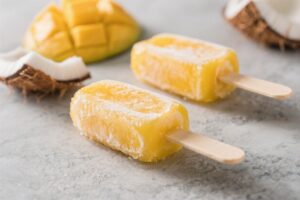
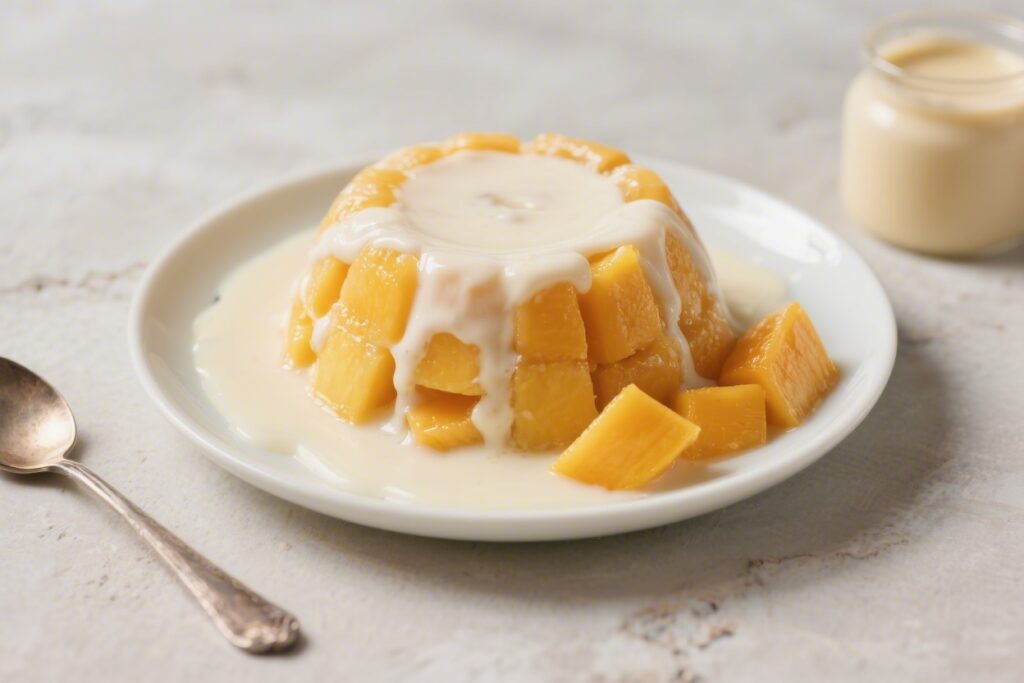
This is the kind of dessert that makes hot days feel a little softer. Creamy, fruity, and perfectly sweet, this mango pudding comes together with simple pantry staples and ripe mangoes. No oven, no complicated steps—just a silky, spoonable treat that chills beautifully.
If you love mangoes and crave an easy make-ahead dessert, this is one you’ll put on repeat. It’s family-friendly, party-ready, and tastes like sunshine in a bowl.
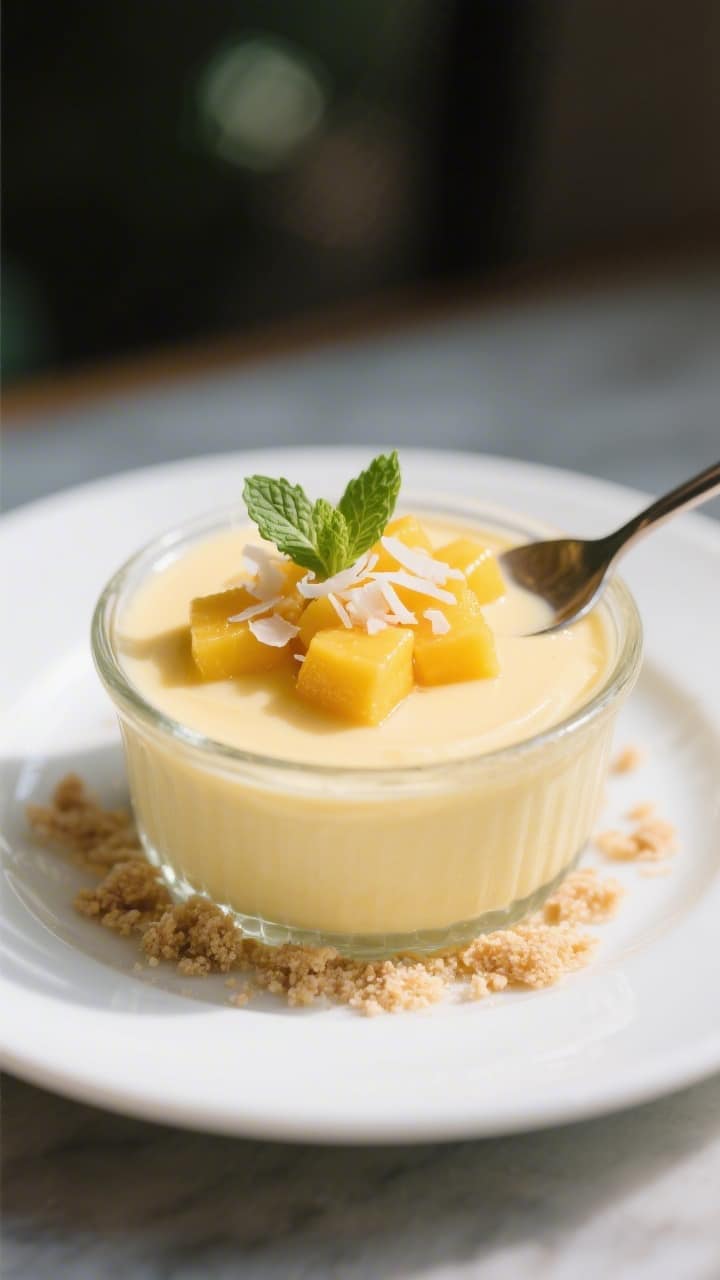
Creamy Mango Summer Pudding With Condensed Milk – A Cool, Comforting Treat
Ingredients
- Fresh ripe mangoes (3 large or 4 medium), peeled and cubed – about 3 cups pulp
- Sweetened condensed milk – 1 can (14 oz/397 g)
- Heavy cream or whipping cream – 1 cup (240 ml)
- Whole milk – 1 cup (240 ml)
- Unflavored gelatin – 2 1/2 teaspoons (about 1 envelope, 7 g)
- Cold water – 1/4 cup (60 ml) for blooming gelatin
- Fresh lime or lemon juice – 1 to 2 tablespoons (to brighten flavor)
- Vanilla extract – 1 teaspoon
- Pinch of salt – to balance sweetness
- Optional toppings: diced mango, toasted coconut flakes, crushed digestive biscuits or graham crackers, mint leaves
Instructions
- Prep the mangoes: Peel and pit the mangoes.Cut into chunks and blend until smooth. You should have about 3 cups of mango puree. If you prefer a silkier texture, pass the puree through a fine mesh sieve.
- Bloom the gelatin: In a small bowl, sprinkle gelatin over 1/4 cup cold water.Let it sit for 5 to 10 minutes until spongy. This step ensures even dissolving later.
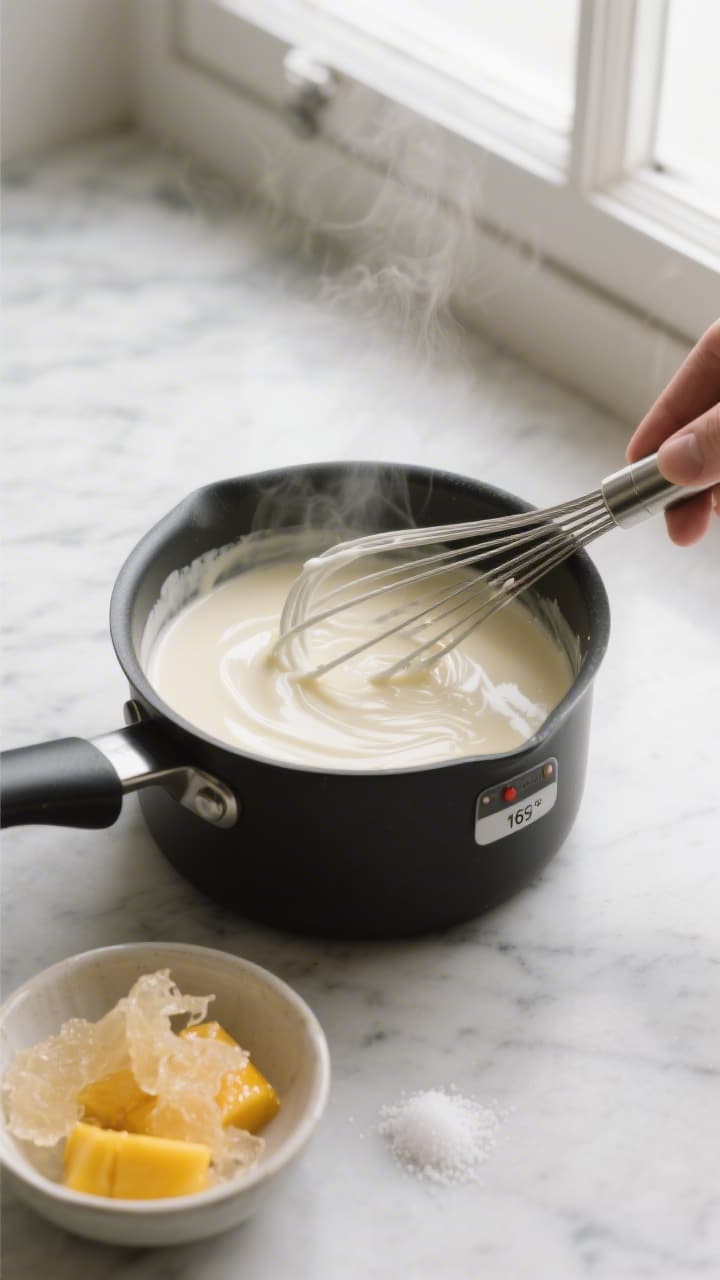
- Warm the dairy base: In a saucepan, combine whole milk and condensed milk. Heat over low to medium-low, stirring often, until warm and steamy but not boiling.You want it hot enough to dissolve the gelatin, around 160–170°F (70–75°C).
- Dissolve the gelatin: Remove the pan from heat. Add the bloomed gelatin and whisk until completely dissolved. If you see any tiny grains, return to very low heat and whisk gently for 30 seconds more.Do not boil.
- Add cream and flavorings: Stir in heavy cream, vanilla, and a pinch of salt. The mixture should be smooth and lightly thickened.
- Combine with mango: Whisk the mango puree into the warm dairy mixture. Taste and add 1 to 2 tablespoons of lime or lemon juice to brighten the flavor.If your mangoes are very sweet, the citrus cuts through and keeps the pudding refreshing.
- Strain (optional but recommended): For an ultra-smooth finish, pour the mixture through a fine sieve into a large bowl or measuring jug. Press through with a spatula.
- Portion and chill: Pour into a large serving dish or individual ramekins/glasses. Let cool to room temperature, then cover and refrigerate for at least 4 hours, preferably overnight, until softly set.
- Garnish and serve: Top with diced mango, toasted coconut, crushed biscuits, or a sprig of mint.Serve chilled. The texture should be creamy and spoonable, not rubbery.
What Makes This Special
This pudding is all about balance. The fresh tang of mango pairs with the rich sweetness of condensed milk, while a touch of cream gives it that dreamy texture.
It sets lightly, so it’s soft and custardy rather than firm like gelatin cubes. You can serve it plain, or dress it up with toasted coconut, crushed biscuits, or juicy berries. Best of all, it keeps well, making it perfect for summer gatherings or a weeknight treat.
Ingredients
- Fresh ripe mangoes (3 large or 4 medium), peeled and cubed – about 3 cups pulp
- Sweetened condensed milk – 1 can (14 oz/397 g)
- Heavy cream or whipping cream – 1 cup (240 ml)
- Whole milk – 1 cup (240 ml)
- Unflavored gelatin – 2 1/2 teaspoons (about 1 envelope, 7 g)
- Cold water – 1/4 cup (60 ml) for blooming gelatin
- Fresh lime or lemon juice – 1 to 2 tablespoons (to brighten flavor)
- Vanilla extract – 1 teaspoon
- Pinch of salt – to balance sweetness
- Optional toppings: diced mango, toasted coconut flakes, crushed digestive biscuits or graham crackers, mint leaves
Instructions
- Prep the mangoes: Peel and pit the mangoes.
Cut into chunks and blend until smooth. You should have about 3 cups of mango puree. If you prefer a silkier texture, pass the puree through a fine mesh sieve.
- Bloom the gelatin: In a small bowl, sprinkle gelatin over 1/4 cup cold water.
Let it sit for 5 to 10 minutes until spongy. This step ensures even dissolving later.
- Warm the dairy base: In a saucepan, combine whole milk and condensed milk. Heat over low to medium-low, stirring often, until warm and steamy but not boiling.
You want it hot enough to dissolve the gelatin, around 160–170°F (70–75°C).
- Dissolve the gelatin: Remove the pan from heat. Add the bloomed gelatin and whisk until completely dissolved. If you see any tiny grains, return to very low heat and whisk gently for 30 seconds more.
Do not boil.
- Add cream and flavorings: Stir in heavy cream, vanilla, and a pinch of salt. The mixture should be smooth and lightly thickened.
- Combine with mango: Whisk the mango puree into the warm dairy mixture. Taste and add 1 to 2 tablespoons of lime or lemon juice to brighten the flavor.
If your mangoes are very sweet, the citrus cuts through and keeps the pudding refreshing.
- Strain (optional but recommended): For an ultra-smooth finish, pour the mixture through a fine sieve into a large bowl or measuring jug. Press through with a spatula.
- Portion and chill: Pour into a large serving dish or individual ramekins/glasses. Let cool to room temperature, then cover and refrigerate for at least 4 hours, preferably overnight, until softly set.
- Garnish and serve: Top with diced mango, toasted coconut, crushed biscuits, or a sprig of mint.
Serve chilled. The texture should be creamy and spoonable, not rubbery.
How to Store
- Refrigerate: Keep covered in the fridge for up to 4 days. Individual portions in jars or ramekins store especially well.
- Avoid freezing: Freezing can cause the pudding to separate and turn grainy once thawed.
- Keep toppings separate: Add crunchy toppings right before serving to maintain texture.
- Stirring after set: If condensation forms on top, gently blot with a paper towel.
Don’t stir once set or it may loosen the gel.
Health Benefits
- Mangoes bring nutrients: They’re rich in vitamin C, vitamin A, and antioxidants like beta-carotene, which support immune health and skin.
- Protein and calcium: Milk and cream provide calcium and small amounts of protein, supporting bones and muscles.
- Energy-dense: The dessert is calorie-rich, which can be helpful if you need an energy boost or are serving active kids.
- Customizable sweetness: You can adjust the condensed milk or add citrus to balance flavors, making it easier to fit personal preferences.
Note: This pudding is indulgent due to the condensed milk and cream. Enjoy mindful portions, and pair with fresh fruit for added fiber.
What Not to Do
- Don’t boil the gelatin: High heat weakens its setting power and can lead to a runny pudding.
- Don’t skip the bloom: Adding dry gelatin straight to hot liquid can cause clumps that never dissolve.
- Don’t use stringy or underripe mangoes: They can leave fibrous bits and a sour taste. Choose soft, fragrant fruit.
- Don’t rush the chill time: The pudding needs several hours to set.
Cutting it short means a loose, soupy texture.
- Don’t over-sweeten: Condensed milk is already quite sweet. Adjust with citrus before adding extra sugar.
Variations You Can Try
- Coconut twist: Swap half the whole milk for full-fat coconut milk. Add toasted coconut on top for a tropical finish.
- Yogurt light: Replace half the cream with thick Greek yogurt added after the gelatin mixture cools to lukewarm.
This adds tang and a lighter feel.
- Mango swirl cups: Reserve 1/2 cup mango puree. Layer pudding and puree in clear glasses for a pretty marbled look.
- Biscuit base: Press a thin layer of crushed graham crackers or digestive biscuits mixed with a little melted butter into the bottom of your dish. Chill, then pour pudding over for a cheesecake-style vibe.
- Spice kiss: Add a pinch of cardamom or a grating of fresh lime zest to the mix for a fragrant lift.
- Agar-agar option: For a vegetarian set, use agar-agar powder.
Dissolve 1 to 1 1/2 teaspoons in the milk-condensed mixture and simmer for 1–2 minutes before combining with mango. Expect a firmer set than gelatin.
FAQ
Can I use frozen mango?
Yes. Thaw completely and drain excess liquid before blending.
Taste the puree and adjust with lime juice if it seems flat. Frozen mango can be less aromatic, so a touch of vanilla and citrus helps.
What if my pudding doesn’t set?
It’s usually due to underbloomed gelatin or overheating it. You can refrigerate longer or gently re-warm a portion, dissolve 1/2 to 1 teaspoon extra gelatin in cold water, melt it, and whisk back in.
For next time, measure gelatin carefully and avoid boiling.
Is there a way to make it less sweet?
Use 3/4 can of condensed milk and add more milk to compensate. Increase lime juice slightly and include a pinch more salt. Topping with tangy fruit like raspberries also balances sweetness.
Can I make it dairy-free?
Yes.
Use coconut milk and coconut cream instead of dairy, and swap gelatin for agar-agar. Keep in mind the set will be firmer and the flavor more coconut-forward.
How far in advance can I prepare it?
Up to 2 days ahead is ideal. The texture stays smooth, and the flavor develops.
Add toppings just before serving to keep them crisp and fresh.
Do I need to strain the mango puree?
Not strictly, but straining removes fibers and makes the pudding luxuriously smooth. If your mangoes are very ripe and non-fibrous, you can skip it.
What’s the best mango to use?
Choose fragrant, soft mangoes like Alphonso, Ataulfo/Honey, Kesar, or Kent. They’re naturally sweet, low in fiber, and blend into a silky puree.
Can I set it in a large mold?
Yes, but lightly oil the mold with neutral oil and wipe away excess.
To unmold, dip the base in warm water for 5–10 seconds and invert. Note that this pudding is softly set, so handle gently.
How can I make it kid-friendly for parties?
Portion into small cups, add fun fruit toppings, and keep the texture soft. You can reduce lime juice slightly if your audience prefers a sweeter profile.
Why add salt to a dessert?
A tiny pinch enhances flavors and balances sweetness.
It won’t make the pudding taste salty—just more rounded and satisfying.
Final Thoughts
Creamy Mango Summer Pudding with Condensed Milk is the dessert you’ll lean on when you want something easy, bright, and crowd-pleasing. With ripe mangoes and a handful of staple ingredients, it delivers a cool, silky finish every time. Keep it classic, or try one of the variations to suit your taste and dietary needs.
However you serve it, expect empty bowls and happy faces.