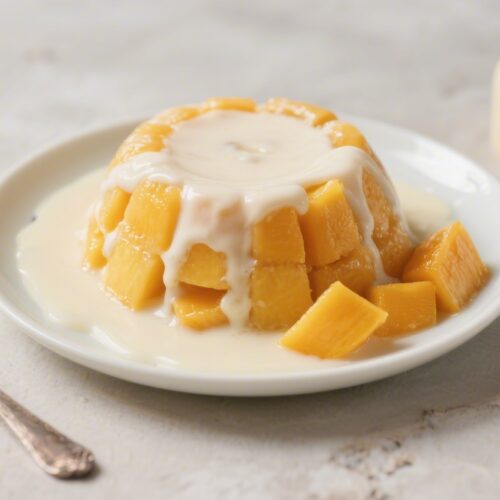
Creamy Mango Summer Pudding With Condensed Milk – A Cool, Comforting Treat
Ingredients
- Fresh ripe mangoes (3 large or 4 medium), peeled and cubed – about 3 cups pulp
- Sweetened condensed milk – 1 can (14 oz/397 g)
- Heavy cream or whipping cream – 1 cup (240 ml)
- Whole milk – 1 cup (240 ml)
- Unflavored gelatin – 2 1/2 teaspoons (about 1 envelope, 7 g)
- Cold water – 1/4 cup (60 ml) for blooming gelatin
- Fresh lime or lemon juice – 1 to 2 tablespoons (to brighten flavor)
- Vanilla extract – 1 teaspoon
- Pinch of salt – to balance sweetness
- Optional toppings: diced mango, toasted coconut flakes, crushed digestive biscuits or graham crackers, mint leaves
Instructions
- Prep the mangoes: Peel and pit the mangoes. Cut into chunks and blend until smooth. You should have about 3 cups of mango puree. If you prefer a silkier texture, pass the puree through a fine mesh sieve.
- Bloom the gelatin: In a small bowl, sprinkle gelatin over 1/4 cup cold water. Let it sit for 5 to 10 minutes until spongy. This step ensures even dissolving later.
- Warm the dairy base: In a saucepan, combine whole milk and condensed milk. Heat over low to medium-low, stirring often, until warm and steamy but not boiling. You want it hot enough to dissolve the gelatin, around 160–170°F (70–75°C).
- Dissolve the gelatin: Remove the pan from heat. Add the bloomed gelatin and whisk until completely dissolved. If you see any tiny grains, return to very low heat and whisk gently for 30 seconds more. Do not boil.
- Add cream and flavorings: Stir in heavy cream, vanilla, and a pinch of salt. The mixture should be smooth and lightly thickened.
- Combine with mango: Whisk the mango puree into the warm dairy mixture. Taste and add 1 to 2 tablespoons of lime or lemon juice to brighten the flavor. If your mangoes are very sweet, the citrus cuts through and keeps the pudding refreshing.
- Strain (optional but recommended): For an ultra-smooth finish, pour the mixture through a fine sieve into a large bowl or measuring jug. Press through with a spatula.
- Portion and chill: Pour into a large serving dish or individual ramekins/glasses. Let cool to room temperature, then cover and refrigerate for at least 4 hours, preferably overnight, until softly set.
- Garnish and serve: Top with diced mango, toasted coconut, crushed biscuits, or a sprig of mint. Serve chilled. The texture should be creamy and spoonable, not rubbery.
Tried this recipe?Let us know how it was!